Blue Kitchen Design Ideas for 2026 – Modern, Navy, Soft and Deep Blue Styles
While planning kitchen design ideas for 2026, especially kitchens with blue and gray tones and wider layouts, I noticed a clear trend. People want calm colors that feel peaceful but still work for daily cooking. A kitchen should look stylish and polished, but it must also handle real family life. That means strong finishes, smart storage, and lighting that works well every day.
In this guide, I share the main blue kitchen ideas I see for 2026. This includes soft blue kitchens, blue and green color mixes, bold blue backsplash ideas, and statement blue cabinet colors. I also explain how I would plan each style, why I choose certain materials, and how you can use these ideas at home. These ideas work for dark kitchens, light kitchens, or balanced spaces in between.
1. Blue Kitchen Trends to Watch

When I design a blue kitchen for 2026, I focus on balance first. I want the space to feel calm, warm, and modern at the same time. Many homeowners are moving away from plain white kitchens. Instead, they prefer layered blue shades mixed with gray, beige, wood, and stone. Walls usually stay soft and light. I often use warm white, gentle greige, or very light blue that feels fresh and airy. Blue is then added through cabinets, islands, or backsplashes so the room does not feel heavy.
In a typical 2026 blue kitchen, I like flat panel or slim shaker cabinets in dusty blue or soft navy. Countertops are often quartz or porcelain in warm white with light veining. I usually mix finishes like brushed brass or black hardware. I also like using both open shelves and closed cabinets to keep the kitchen stylish but practical. Flooring works best in warm wood tones or stone look tiles. Lighting matters a lot, so I always combine ceiling lights, island pendants, and under cabinet lighting.
The blue kitchens that work best in 2026 mix modern and farmhouse details in a soft way. I like warm wood accents and vintage touches, but I keep clean lines so the space still looks modern. I also follow a simple rule of using only three or four main colors. I choose one main blue and let neutral shades support it.
I also pay close attention to appliances. Stainless steel or black appliances should blend well with blue tones. I often suggest panel ready dishwashers, hidden refrigerators, and built in ventilation so the blue design stays the focus.
2. Blue and Gray Kitchen Design Ideas

When working with blue and gray kitchens, I think about warmth first. Blue is naturally cool, so I balance it with warmer gray shades. I avoid harsh industrial gray. A layout I often use includes mid blue lower cabinets, soft gray upper cabinets, and warm off white walls in between. This combination feels elegant and works well in both small and large kitchens.
For finishes, I usually choose shaker or slab cabinets in muted blue. Countertops often include gray or taupe tones. Hardware in brushed nickel or black keeps everything balanced. I like adding stools, rugs, and small decor pieces that repeat blue and gray in soft ways. This makes the space feel planned without being forced.
Blue and gray kitchens can feel cold if texture is missing. To avoid that, I always add natural materials. Wooden boards, woven baskets, soft fabrics, and warm runners help soften the space. I have seen this approach work very well in real homes.
Lighting also plays a big role here. I keep lighting warm instead of bright white. For metal finishes, chrome, black, or mixed metals work best when they are not too shiny. Simple pendant lights with soft shapes suit blue and gray kitchens well.
3. All Blue Kitchen Design Ideas

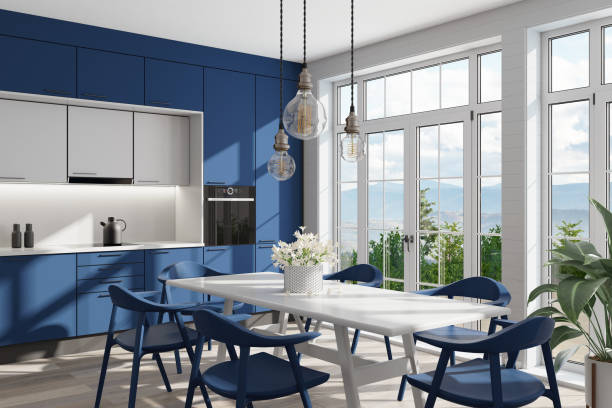
When designing an all blue kitchen, I let blue take the lead and use neutrals as support. I may use blue for base cabinets, the island, and pantry doors. To avoid a flat look, I use different blue shades. Lower cabinets might be mid blue, the island slightly darker, and upper cabinets a lighter powder blue. Walls and ceilings stay simple so the cabinetry stands out.
For counters and hardware, I prefer white or very light gray surfaces. Hardware stays clean and modern, often in brushed nickel or stainless steel. Straight bar handles work especially well with bold blue cabinets. Seating is usually neutral with light blue details. Flooring stays warm with wood or beige tones.
The best all blue kitchens use different finishes. I often mix satin cabinets, matte walls, and glossy backsplash tiles. This helps light move around the room. I also repeat the blue color in fabrics and small decor items so the design feels intentional.
All blue kitchens can be adjusted to different home styles. Apartments, modern homes, and farmhouse kitchens all use blue differently. Cabinet style, layout, and shade depth change based on the space.
4. Blue and Green Kitchen Color Ideas

When combining blue and green in a kitchen, I look to nature for guidance. Think of the sea, trees, and sky. I usually place blue on main cabinets or the island and use green on pantry doors or accent shelving. Walls stay creamy or very soft green gray so everything connects smoothly.
I choose soft blues like teal or muted navy and pair them with sage or olive green. Countertops often stay warm white or light wood. Sometimes I add a patterned tile in blue and green behind the stove while keeping the rest of the backsplash simple. Small decor pieces repeat both colors in gentle ways.
The key to blue and green kitchens is keeping color strength balanced. I avoid using two dark shades together. One deeper shade paired with a softer one keeps the kitchen calm. I always test paint samples in different lighting before making final choices.
For metals and wood finishes, I usually choose warm brass or antique bronze. In modern kitchens, black hardware can also work if used carefully. Matching wood tones with the right blue and green shades makes the space feel finished.
5. Blue Kitchen Backsplash Design Ideas
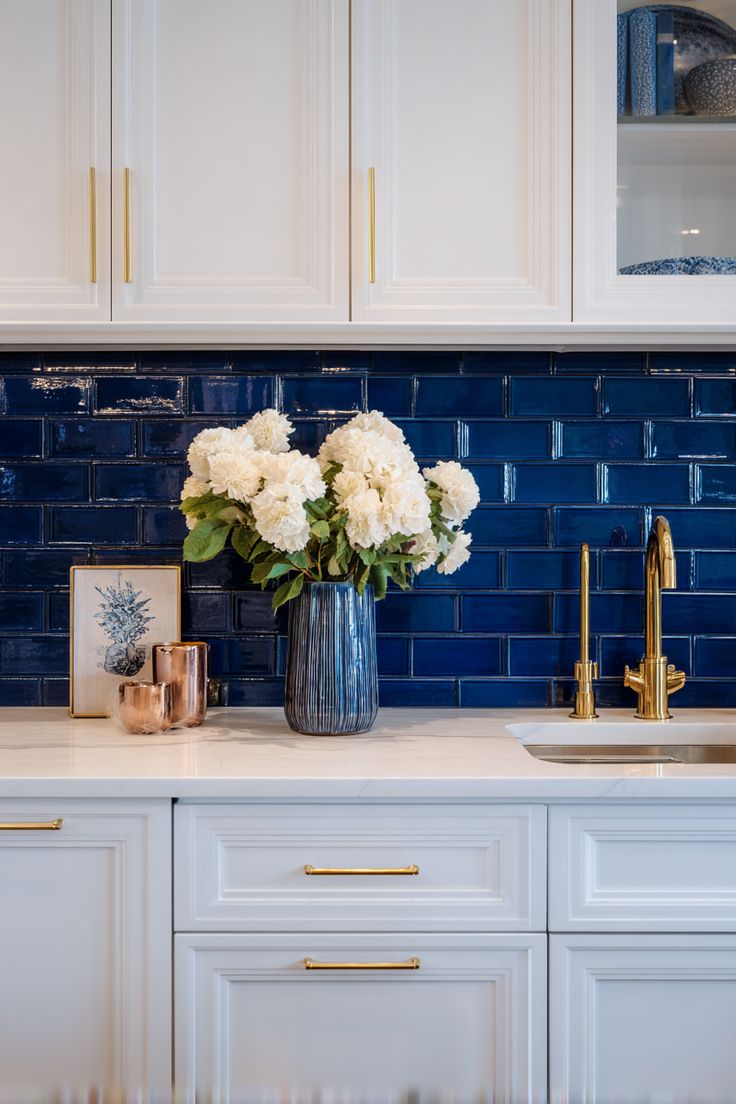
When planning blue backsplash ideas, I treat the backsplash as a feature. A blue backsplash can feel coastal, vintage, or modern depending on tile choice. I often use long subway tiles in powder blue or soft sky blue. Handmade style tiles also work well. Everything else in the kitchen supports the backsplash instead of competing with it.
Tile layout matters. Stacked tiles look clean and modern, while herringbone adds movement. Grout color makes a big difference. Light grout feels fresh, while darker grout adds contrast. Sometimes I use blue veined stone for a smooth and elegant look. I usually connect the backsplash color to the cabinet blue by choosing a lighter or deeper version of the same shade.
Bold blues like navy work very well on backsplashes. It is easier to update later compared to cabinets. A good blue backsplash also protects the walls and adds value to the kitchen.
Cleaning is important too. Glossy tiles are easier to wipe down, while textured tiles need more care. I always consider daily use when choosing backsplash materials.
6. Blue Kitchen Cabinet Color Ideas

When choosing blue cabinet colors, I first decide how bold the kitchen should be. Some people love full blue cabinetry, while others prefer just a blue island. Natural light, ceiling height, and flooring all influence this choice. Dark rooms work better with lighter blues, while bright spaces can handle deeper tones.
Light blues feel open and modern. Mid blues with gray undertones feel balanced and timeless. Navy works best for dramatic kitchens. I often mix blue lower cabinets with white uppers or keep pantry cabinets neutral. Hardware, countertops, and appliances are always selected to support the cabinet color.
Blue cabinets stay stylish when the undertone matches the home style. Farmhouse homes suit softer or deeper blues, while modern homes work well with rich navy. I also think about how seasonal decor and appliances will look with the chosen blue.
Finish choice matters too. Matte, satin, and semi gloss all change how blue looks and how easy it is to clean. Busy kitchens usually need finishes that handle wear better.
7. Dark Blue Kitchen Design Concepts

Dark blue kitchens should feel rich but still practical. Navy and midnight blue create a cozy and elegant mood when balanced well. I often use dark blue on lower cabinets and islands while keeping upper areas light or open. This prevents the space from feeling too heavy.
I pair dark blue cabinets with warm metal finishes and creamy countertops. Light quartz surfaces brighten work areas. Seating in brown or caramel tones adds warmth and handles daily use well. Wood floors or wood accents help ground the design.
Lighting is very important in dark kitchens. I always use layered lighting. General ceiling lights, under cabinet lighting for tasks, and decorative lights for mood. Dimmers are essential. They allow the kitchen to shift easily from cooking to relaxing.
I also add small color accents like neutral runners, soft ceramics, or green plants. These details bring life to dark blue kitchens without clashing.
8. Navy Blue Kitchen Design Inspiration

I see navy as a classic neutral rather than a bold color. Navy works beautifully with white, wood, gray, stone, and many metal finishes. I often design around a navy island or navy base cabinets. It feels timeless and polished.
I contrast navy with light finishes like white cabinets, light wood, and soft blue tiles. Seating often combines beige and navy fabrics. Decor stays simple with glass lighting, subtle rugs, and framed art.
Navy is also very practical for family kitchens. It hides marks better than light colors and still feels bright with the right surfaces. navy works well in coastal homes, farmhouse kitchens, and modern apartments.
9. Soft Light Blue Kitchen Design Ideas

When I create light blue kitchen designs, my main goal is to make the space feel calm and fresh, while still being warm enough for daily use. I always picture early morning skies or a light powdery blue resting gently on cabinets and sometimes even on the walls. Light blue works beautifully with beige and warm white, so I usually keep the walls and ceiling neutral. I then bring the blue into lower cabinets, a small island, or a built-in seating area. This look works especially well in smaller kitchens where dark or navy colors can feel too heavy.
For cabinets and furniture, I lean toward simple shaker or flat-front doors painted in pale blue. I like pairing them with white quartz countertops that have light gray veins. For the floor, light oak or beige porcelain tiles are my go-to choice. I usually add slim black or metal handles for a clean, modern touch. To warm things up, I include woven counter stools made from natural materials. If space allows, I love adding a small breakfast table with a round wooden top and soft gray or pastel striped chairs that match the cabinets. This keeps the kitchen connected to larger blue kitchen themes while still feeling unique.
Light blue kitchens look best when the color palette stays simple and consistent. I avoid adding too many accent colors because they can make the space feel busy very quickly. Instead, I usually repeat blue in a few intentional ways, like one fabric, one artwork piece, and one small accessory to keep the look balanced. I also pay close attention to lighting because light blue shades can appear flat or dull in the wrong conditions. Before choosing a color, I always test paint samples in both daylight and artificial lighting and compare a few shades side by side. Some blues lean more gray while others have green undertones, and those subtle differences can completely change the feel of the kitchen once everything comes together.
Here, I would also include more examples showing how light blue kitchens can fit different styles. This could range from cottage-inspired looks with beadboard details to sleek modern apartments. I would also go deeper into choosing the right flooring undertone so readers can better match these ideas to their own homes.
10. Blue and Gray Kitchen Color Pairings

When I design kitchens using blue and gray together, I focus on balance and elegance. Blue brings energy and personality, while gray softens it and adds a mature feel. I usually apply blue to cabinets or the island, then use gray for countertops, backsplashes, flooring, or even wall paint. This color mix works especially well in larger kitchens and open layouts.
For materials, I often use mid-tone blue lower cabinets with pale blue upper cabinets or soft greige walls. Light gray quartz countertops with gentle veining tie the colors together nicely. Stone or concrete-style backsplashes complete the look. I like bar stools with cushioned seats in mixed blue and gray tones. A runner rug with muted blue, gray, beige, and brown helps ground the space. Black or brushed nickel hardware pulls everything together and keeps the style modern and calm.
One risk with blue and gray kitchens is that they can feel flat if texture is missing. To avoid that, I add wooden cutting boards, woven baskets, linen curtains, and sometimes a vintage-style rug. I often suggest stress how important texture is when working with cool colors, . These layers make the kitchen feel welcoming instead of cold.
In this part, I would add more guidance on using blue backsplashes within blue and gray kitchens. A carefully chosen blue tile or stone can connect both colors smoothly. I would also explain backsplash patterns and grout choices so the design feels intentional and polished.
11. Blue and Yellow Kitchen Color Concepts

When I plan blue and yellow kitchens, I imagine the sea meeting the sun, while still keeping things practical. Used carefully, yellow and soft gold brighten the space and pair beautifully with blue cabinets or backsplashes. I usually start with blue cabinets or blue walls, then bring yellow in through decor, fabrics, or a small feature wall. This approach makes it easy to update the look later.
For cabinets and finishes, I like mid-blue shaker cabinets paired with white or pale beige quartz countertops. I keep backsplashes simple in white or light gray. Bar stools with subtle blue and yellow stripes work well here. Yellow can also show up in pendant lights, seat cushions, framed artwork, or patterned rugs. I keep the rest of the palette neutral with gray and wood tones so the accents stand out without overpowering the room. Warm metals like brushed brass or soft gold help tie everything together.
The key to making blue and yellow work well together is balancing the intensity of each color. I usually prefer blue as the main shade while using softer or lighter yellow tones as accents to keep the space from feeling overwhelming. In most rooms, bold colors work best when they are used in smaller amounts rather than dominating the entire design. That is why I often keep yellow limited to decor pieces like cushions, artwork, or accessories, since they are easy to update whenever the style changes.
In this section, I would also explain how to shift a blue and yellow kitchen toward either a coastal or farmhouse look. Small details like beadboard panels, vintage-style lights, or classic hardware can change the entire mood while using the same base colors.
12. Blue and Green Kitchen Color Mixes

When I design blue and green kitchens, I think of natural landscapes flowing into the home. I like combining different shades instead of just two solid colors. For example, I may use deep teal on the island, soft blue-gray on the main cabinets, and sage green on a pantry or bench door. Walls stay creamy or very light gray to keep the room open and bright.
I pair these colors with natural materials like wood and stone. Blue-green handmade tiles, warm oak floors, beige quartz countertops, and stone details all support a nature-inspired feel. I may add green glazed tiles behind the range and keep the rest of the backsplash neutral. Light fabric stools, white dishes, and a few black-framed botanical prints finish the look without adding color clutter.
Blue and green kitchens are one of the easiest ways to create a calm but stylish space. The secret is choosing shades with matching undertones. Cool blues work best with fresh cool greens, while blue-grays pair better with olive or moss tones. I often suggest recommend matching paint colors with existing floors and countertops, since those fixed elements strongly affect how paint colors look.
Here, I would expand on how to mix blue cabinets with soft green accents. I would show examples like blue lower cabinets with green uppers or a green island surrounded by blue cabinets to help readers decide how bold they want to go.
13. Blue Kitchen Decoration Ideas

I often help homeowners refresh their kitchens with blue decor instead of a full remodel. This works great when cabinets are neutral. I use decor to bring in blue shades ranging from soft powder blue to deep midnight tones through fabrics, art, and accessories. This keeps things flexible and easy to update with the seasons.
I usually start with rugs, runners, and window treatments. A vintage-style rug with blue and brown tones works well on the floor. Soft blue café curtains with subtle stripes add charm at the windows. Then I add blue ceramic bowls, vases, utensil holders, and framed photos with blue accents. Chairs with blue cushions and pale blue jars on open shelves can completely change the feel of a white or gray kitchen.
I avoid using too much blue in small or darker kitchens because it can make the space feel heavy. Instead, I stick to one or two main shades to keep the color palette clean and balanced. I also prefer grouping decor pieces rather than spreading them across every surface. This keeps the kitchen looking more organized, visually calm, and much easier to clean and maintain.
In this part, I would also explain different decor styles like coastal looks with sky blue glass and driftwood, or farmhouse styles with navy checks and enamel pieces. A deeper guide would help readers choose decor that fits their existing cabinets and counters with less trial and error.
14. Blue and White Kitchen Design Styles

When I design blue and white kitchens, I aim for a timeless look that works all year round. Blue and white has always been popular for a reason. It brings to mind the sea, the sky, and fresh linens. This combo looks great in both modern and farmhouse homes. I usually choose one blue shade for cabinets or the island, then balance it with crisp white walls, ceilings, or upper cabinets. This keeps the kitchen bright and open.
A common setup I use includes navy or mid-blue lower cabinets, white upper cabinets, white quartz countertops, and either a blue or neutral backsplash. I often add chairs with blue and white fabric, classic subway tiles, and touches of wood through shelves or cutting boards. Hardware choices depend on the style. Black handles give a bold modern look, while chrome or polished nickel feels more traditional.
One of the biggest advantages of blue and white kitchens is how flexible they are. For a softer and more relaxed look, I like using light sky blues with pale wood and subtle panel details. For something more dramatic, deeper blue tones paired with sleek cabinets create a cleaner and more modern feel. I have also noticed that blue and white kitchens tend to age well because the color combination feels classic rather than overly trendy. It adds personality to the space while still appealing to a wide range of styles and future buyers.
Another area I would expand on here is pattern use. Patterned tiles, fabrics, and dishes work well in blue and white kitchens, but I prefer limiting them to one or two main patterns. In a full guide, I would explain how to mix small and large patterns carefully and how to highlight key architectural features without making the space feel busy.
15. Soft Blue Kitchen Wall Ideas

I enjoy using blue on kitchen walls because it sets the feeling for the entire space. For 2026, I mostly suggest a light blue mixed with a soft gray tone. This color feels calm and airy, but it also looks polished. When clients ask me about blue and gray kitchen ideas, I explain how a gentle, toned-down blue wall makes it easy to add bold accents without making the kitchen feel dark or heavy. Blue walls also work very well in small kitchens. They help the space feel deeper and more open while keeping focus on the cabinets and countertops.
When I design this style of kitchen, I always balance blue walls with white and wood cabinets. A layout I often recommend includes warm white shaker-style cabinets on the lower units, paired with open oak shelves above. This lets the wall color show through and act as a design feature. For hardware, I like slim brushed nickel or soft black and bronze pulls. These finishes stand out nicely against blue and white without overwhelming the look. To keep the walls from feeling flat, I add pale stone countertops, simple subway tiles that are slightly lighter than the wall color, and soft under-cabinet lighting that stays subtle.
Many people worry that blue walls will limit their decor options, but I have found the opposite to be true. Blue works well with a wide range of seasonal colors and textures, which makes updating the space much easier throughout the year. In autumn, I like adding muted rust tones or warm yellow accents through artwork, stools, or fabrics. In spring, softer greens and floral patterns blend naturally with blue walls without feeling disconnected. I also like that wall color is one of the easiest parts of a kitchen to update. If the shade no longer feels right after a few years, repainting the walls is much simpler and more affordable than replacing cabinets or flooring.
I also like adding extra texture to this look. Wool bar stools, pastel ceramic vases, and a natural jute runner help the kitchen feel warm and inviting. For new projects, I sometimes suggest blue limewash or lightly textured plaster instead of standard paint. This adds depth and movement to the walls and gives the blue more character.
16. Blue and Black Kitchen Style Ideas

When I think about blue and black kitchens, I picture a clean and refined space that feels modern but still comfortable. I often use navy or deep ink blue on the lower cabinets and pair it with black and metal details for contrast. This color combination works especially well in open-plan homes where the kitchen needs to connect with a modern living area but still feel like its own space. Keeping the color palette controlled helps the kitchen look more like a custom furniture piece instead of a basic work zone.
For cabinet design, I usually suggest flat-panel blue doors with built-in pulls to keep the lines simple and smooth. A black quartz countertop paired with a matching black induction cooktop creates a seamless surface. To stop the room from feeling too dark, I add lighter elements. Pale terrazzo floors help reflect light, and glass pendant lights with black frames work well above the island. I also like using glossy midnight blue tiles for the backsplash. They bounce light around and help tie the cabinets and walls together. When I discuss blue and black kitchen ideas with clients, this mix of navy and black metal always feels bold, classic, and long-lasting.
I enjoy working with this contrast because it looks elegant, photographs beautifully, and stays stylish for years without feeling outdated. What I like most is how easy it is to soften the overall look with warmer details. Wooden boards, handmade pottery, woven textures, and soft textiles instantly make the kitchen feel more inviting and lived-in. I also always recommend dimmable lighting because it allows the space to shift naturally from bright and functional during the day to warm and relaxed in the evening.
17. Vintage-Inspired Blue Kitchen Designs

When I imagine a vintage blue kitchen, I think of a space that feels collected over time, not something that looks staged. I prefer softer and slightly muted blues that feel like they belong to another era. This style works especially well in older homes with original trim or unusual layouts. I often pair blue cabinets with a checkered floor or small-pattern wallpaper to make the kitchen feel layered and full of character. This approach suits homeowners who want warmth and personality rather than a purely modern look.
For cabinet details, I usually recommend framed doors with simple lines, classic cup pulls, and a mix of open shelves and glass-front upper cabinets. A farmhouse sink, bridge-style faucet, and wood countertops help complete the vintage feel. For color combinations, I might suggest gray-blue lower cabinets with cream uppers, or a powder blue island paired with white and beige walls. Small cream-colored appliances, decorative plates, and jars help strengthen the sense of history. A patterned runner and touches of brown wood and brass keep the space grounded.
The best vintage blue kitchens may look classic and timeworn on the surface, but they should still function like a modern space. I always include practical features such as smart storage, hidden recycling areas, and updated lighting even when the visible design feels traditional. A vintage-inspired kitchen should still feel comfortable and easy to use every day. Keeping the charm of an older style while improving the functionality is what makes the space feel timeless instead of outdated.
If the kitchen ever feels too plain, I like to add more layers using art and textiles. Framed prints, a small countertop lamp, or even a painted vintage table used as an island can enhance the vintage story without disrupting workflow or space.
18. Coastal Blue Kitchen Themes

For coastal blue kitchens, I like creating a light and airy feel that reminds you of the seaside, without going overboard with nautical decor. I usually mix sky blue with soft white so the room doesn’t feel gloomy, even on rainy days. This style works best for homes near water, but I’ve also used it in city apartments where clients want that calm, vacation-like vibe year-round. Keeping the palette simple is key, letting natural light, reflective surfaces, and textures do most of the work.
In these kitchens, I usually pick plain Shaker-style cabinets in white with a light blue island, or the other way around. Small touches like a green glass vase or sea glass tiles in the backsplash can bring in subtle greens and aqua without overwhelming the space. Light wood or beige floors keep the look warm, while brushed nickel or soft gold hardware, woven pendant lights above the island, and rope or rattan bar stools add a coastal touch without being too literal. I keep upper walls simple so the architecture shines and the blue accents pop.
This type of kitchen feels calm, comfortable, and easy to enjoy every day. Many people are drawn to these spaces because they create a relaxing atmosphere that often looks even better in person than in photos. Clean lines, white surfaces, and natural textures work especially well in coastal inspired homes because they keep the design feeling light and open. When blue is used thoughtfully, it feels natural and connected to the surrounding environment rather than looking overly themed or decorative.
For a bolder touch, I sometimes add ocean-blue tiles behind the range. Silky, rough, or handmade tiles in darker shades add depth while staying in the coastal palette.
19. Blue and Pink Kitchen Styles

A blue and pink kitchen might sound playful, but when balanced, it can feel elegant. I like this for clients who want a fun yet professional look. I usually paint lower cabinets or the island in mid-tone blue and bring in pink through fabrics, bar stools, or a pantry door. The result is a warm, vibrant, and intimate kitchen that isn’t too sweet. This works well in family homes or creative city apartments.
I keep main architectural features simple. Powder or pale blue cabinets paired with white quartz countertops set a calm foundation, then pink comes in via upholstered stools, patterned rugs, or artwork. I avoid busy backsplashes, using plain white subway tiles with light gray grout instead. Brass hardware and lighting keep the space elegant, while black accents or a dark faucet add contrast. Pastel ceramics or fresh flowers subtly reinforce the palette.
Pink works best when used as an accent instead of the main color in the kitchen. I like pairing it with warm wood tones and soft grays because it keeps the space feeling balanced and timeless rather than overly trendy. I also rely on a neutral base for larger surfaces and add pink through smaller details like decor, textiles, or accessories. This makes the kitchen feel warm and stylish without becoming overwhelming or dated over time.
For extra depth, I sometimes add textured details like fluted wood on the island, ribbed glass cabinet doors, or a tiled range hood. This gives the playful palette a layered, sophisticated look.
20. Blue and Orange Kitchen Designs

Blue and orange kitchens feel lively and warm. I usually use a solid blue base like mid-tone or navy cabinets, adding orange or rust accents through stools, rugs, or decor. This combo works great in open-plan homes where the kitchen is the social hub. The balance of cool and warm tones makes the space dynamic.
I keep large surfaces like cabinets and countertops simple, so orange accents can change if tastes shift. For example, blue cabinets with white or light stone countertops, gray backsplash, orange stools, terracotta pots, and wooden cutting boards all blend beautifully. A runner with shades of orange, brown, and blue ties the look together. Slender linear pendant lights, minimal hardware, and a warm metallic statement appliance keep the style modern.
Using bold colors sparingly keeps the space energetic without being overwhelming. Layered textures, like a slatted wood wall or woven baskets, add visual rest between the vivid blues and oranges.
21. Blue and Brown Kitchen Elements

Blue and brown kitchens feel natural, like sky and earth. I recommend mid- to deep-blue cabinets with warm wood floors, shelves, or ceiling beams. This works in modern or farmhouse-style homes, especially in basements or spaces where clients want a fresh yet cozy look.
I often pair a navy island with walnut stools and a brown or wood floor. Light stone countertops balance darker shades, and simple white or beige backsplash keeps the space calm. Accessories like ceramic jars, linen towels, or small plants add detail without clashing.
This combination is easy to maintain and hides wear better than all-white kitchens. It also pairs well with many metals and accent colors. A touch of farmhouse style, like shaker doors or wooden-topped islands, or modern flat cabinets with integrated pulls, can adapt the space to different tastes. Beige or clay-toned accents and a carefully chosen rug help blend the blue and brown elements seamlessly.
22. Pastel Blue Kitchen Ideas

Pastel blue kitchens are cozy, light, and pleasant. I choose muted blues between gray and green to create a calming, neutral effect rather than a bold statement. These colors work well in smaller kitchens or apartments with low light, adding personality without overwhelming the space.
I pair light blue cabinets with soft textures and mild colors. Light oak or ash floors, white quartz countertops, and narrow stacked tiles for the backsplash create a serene backdrop. Brushed nickel or soft brass hardware and glass-front cabinets keep the space airy. Decor is simple, with pale ceramics and textiles, and small touches of yellow or blush for interest.
Pastel blue ages well, blending with future accent colors easily. Textured paint or variegated tiles can add depth without losing the soft, powdery charm.
23. Pale Blue Kitchen Concepts
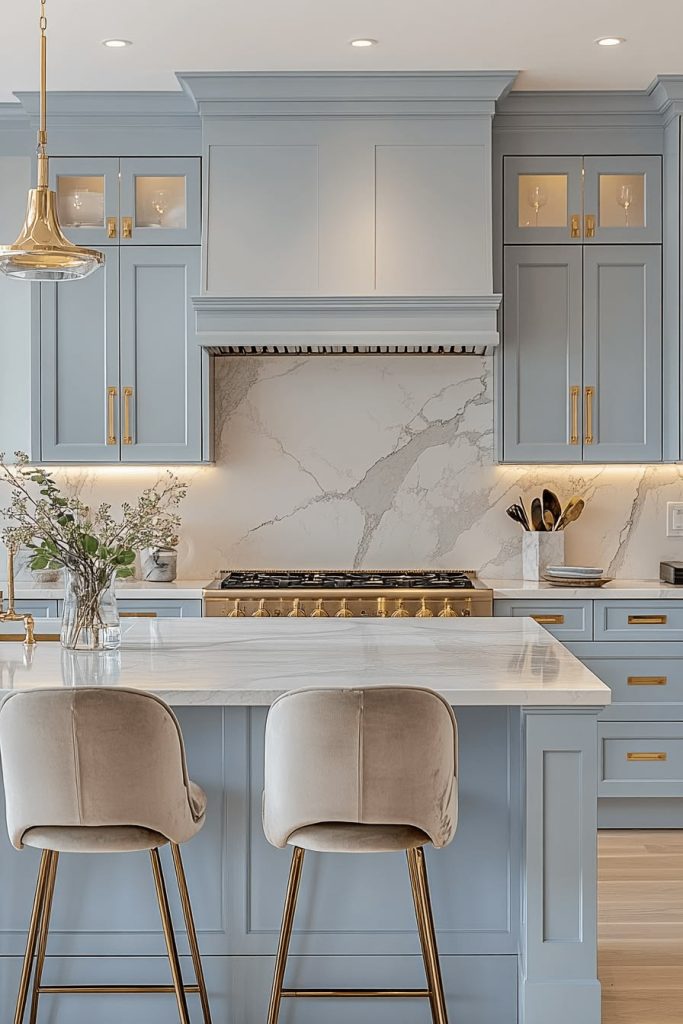
Pale blue kitchens sit between traditional white kitchens and bolder color schemes. I like pale blue cabinets or walls for clients who want a light, calm color without going dark like navy. This works in small apartments or larger farmhouse-style homes.
I often pair pale blue lower cabinets with white upper cabinets or open shelves. Light beige floors, soft gray-veined quartz countertops, and slightly darker stacked tiles for the backsplash keep the look cozy. Minimal lighting, simple black or brushed nickel pulls, and clean-lined bar stools maintain the understated feel. Adding a vintage piece like a wooden hutch or a patterned runner can make the space feel personal and layered.
24. Sky Blue Kitchen Designs

Sky blue kitchens feel bright and uplifting, like sunlight through windows. This color works for clients who like color but don’t want something dark. I usually paint the island or cabinets sky blue, pairing with white walls and a plain backsplash. Light stone countertops, warm wood stools, and a beige woven rug add comfort. Green plants on shelves or windowsills connect the space to the outdoors.
Sky blue is especially effective in kitchens with limited direct sunlight. Reflective surfaces, shiny tiles, or glass help open up the room visually. For a subtle dramatic touch, small handmade tiles in a gradient of pale to dark blue behind the range or sink can enhance the theme.
25. Midnight Blue Kitchen Ideas

Midnight blue kitchens feel cozy, luxurious, and dramatic. This color is perfect for clients who want sophistication beyond black. I usually use midnight blue on most cabinets, sometimes on walls around tall pantries or refrigerators. Light stone countertops and glossy backsplash tiles keep contrast sharp, while brushed brass or black hardware and wood accents add warmth.
Lighting is crucial in dark kitchens. I layer task, ambient, and accent lighting to make the space welcoming. This creates a dramatic yet comfortable kitchen that works well day and night. Adding farmhouse or vintage touches like a wood island top or shaker-style doors softens the look.
26. Powder Blue Kitchen Styles

Powder blue kitchens feel soft, serene, and nostalgic, but still modern. I paint main cabinets powder blue and keep other areas neutral. White or pale gray counters, simple white tile backsplash, and light wood floors create a calm backdrop. Black or bronze hardware, stainless appliances, and minimal decor like small vases or vintage items let the color shine without clutter.
Powder blue is ideal for older homes or kitchens with unusual layouts, as it flattens angles and blends spaces together. Pairing powder blue with natural materials and textured fabrics makes the kitchen feel both fresh and timeless.