
Kitchen Rug Ideas for 2026 | Modern, Farmhouse, and Easy-Wash Styles
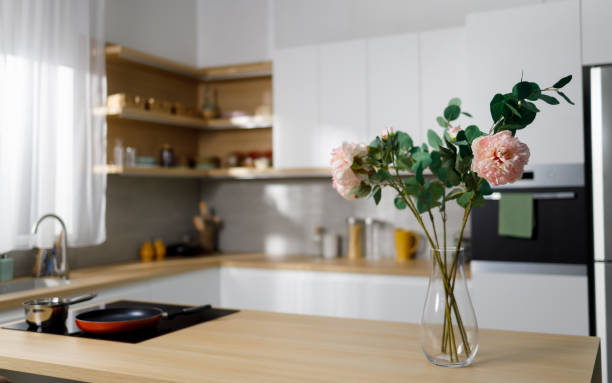
Are you curious about how kitchen rug ideas for 2026 can change the look and comfort of a modern kitchen? You might be wondering which rug styles are easy to wash, safe to walk on, and still look great in open kitchens, big spaces, square layouts, or narrow galley kitchens. In this guide, I share kitchen rug ideas I have personally tried and loved. I cover modern styles, smart layout tips, and design choices that focus on comfort, safety, and style. You will also see farmhouse kitchen rug ideas, rugs placed under tables, and ideas for open kitchens that match real daily life.
1. Contemporary Kitchen Rug Ideas for Clean and Modern Spaces
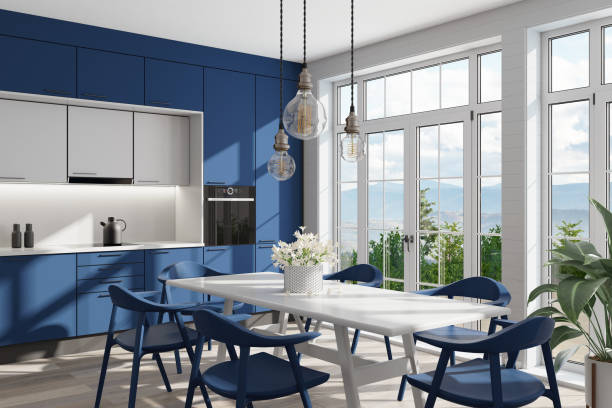
In modern kitchens, I always look at clean shapes, open space, and how the furniture connects with the floor. For 2026, modern kitchen rug ideas focus on simple designs, soft neutral colors, and smart placement near sinks, islands, or peninsulas. These rugs help separate areas in open kitchens while keeping the space calm and easy on the eyes.
When I work on modern kitchens, I prefer low-pile or flat rugs. I usually place them near the sink, food prep areas, or under a table if space allows. These rugs look great with white, black, or green cabinets and match well with smooth countertops and built-in appliances. In large or square kitchens, I find that rectangular or gently shaped rugs support the layout instead of breaking it up.

From what I have seen, many designers in the US suggest soft textures instead of loud patterns for modern kitchens. I agree with this fully. A simple rug adds comfort without stealing attention from the kitchen design. Washable rugs are also a must in busy kitchens, which makes modern kitchen rugs both good-looking and practical. I also notice more rugs made from stain-resistant or recycled materials, which fit well with kitchen rug ideas for 2026.
2. Cozy Farmhouse Kitchen Rug Ideas with a Classic Feel
Farmhouse kitchen rug ideas continue to be a favorite because they add warmth and comfort, even in new homes. I often use these rugs in large kitchens or open layouts with wooden cabinets, farmhouse sinks, and classic furniture. The aim is to make the kitchen feel welcoming while still being easy to maintain.
For farmhouse kitchens, I choose rugs with gentle patterns, soft colors, and a slightly textured feel. They look natural next to wooden tables, open shelves, and vintage-style lights. I usually place them near the sink or under a dining table so the rug holds the space together and adds comfort underfoot.
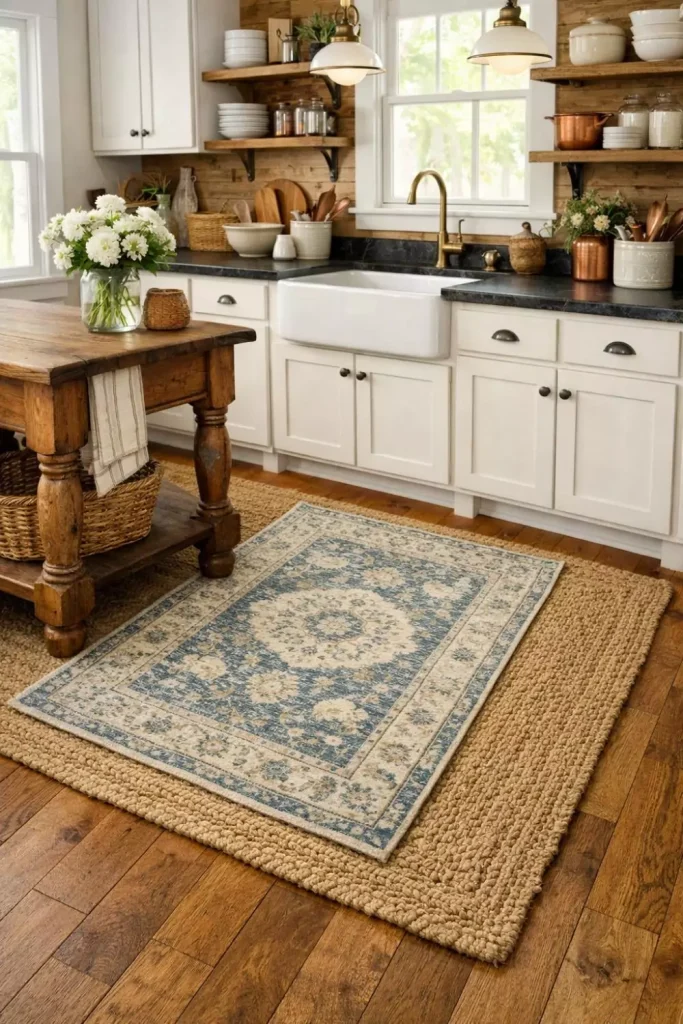
I personally love how farmhouse rugs mix old-style charm with modern function. Many designers stress the importance of washable kitchen rugs in farmhouse spaces, and I agree completely. A rug that looks traditional but cleans easily is perfect for everyday use. These rugs also work well when moving from the kitchen into a nearby dining area in open layouts.
3. Updated Modern Farmhouse Kitchen Rug Ideas with Rustic Touches
Modern farmhouse kitchens mix rustic warmth with cleaner details, and rugs help bring that balance together. These kitchen rug layout ideas are meant to ground the space while keeping it open and airy. I often use them in kitchens with long islands or peninsulas where people walk through often.
The rugs I use in modern farmhouse kitchens usually have soft patterns, neutral colors, and light contrast. They match beautifully with white cabinets, black handles, and warm wood finishes. I place them along the sink area or partly under a table to connect the furniture with the floor.

In my experience, modern farmhouse rugs work best when they feel planned, not just decorative. Many designers suggest avoiding heavy worn-out patterns, and I agree. Simple rustic textures look better over time and suit the changing kitchen styles of 2026. Choosing the right rug size is also important, especially in large kitchens with more than one work area.
4. Rustic Kitchen Rug Ideas Using Natural Looks and Textures
Rustic kitchen rug ideas for 2026 take inspiration from nature and earthy colors. I use these rugs to match stone counters, wooden cabinets, and natural finishes found in rustic kitchens. They are especially helpful in big or open kitchens where the space needs visual balance.
In my own projects, rustic rugs often have woven details, warm brown shades, and simple patterns. They pair nicely with solid wood tables, open shelves, and matte metal fixtures. I usually place them near the sink or in the main work area to add comfort while keeping the rug strong and long-lasting.
I feel rustic rugs look best when they focus on natural materials instead of extra decoration. Many professionals value strength over trends in rustic kitchens, and my experience supports this idea. Rustic rugs also look great when paired with other natural items like linen curtains or ceramic decor for a pulled-together look.

5. Boho Kitchen Rug Ideas for Relaxed and Creative Homes
Boho kitchen rug ideas are all about creativity, color, and a relaxed feel. I often suggest this style for open kitchens where personal style matters more than perfect matching. These rugs add character to kitchens that might feel too plain otherwise.
When I design boho kitchens, I pick rugs with bold patterns or rich colors and a soft feel. They work well with mixed furniture, open shelving, indoor plants, and unique decor pieces. I place them in front of sinks or use a round rug under a small table to soften the layout.

I believe boho rugs look best when they feel thoughtfully chosen, not messy. Many designers recommend keeping the color range limited to avoid visual overload, and I follow this advice to keep the kitchen practical and welcoming. Washable and strong materials are very important here, especially in busy kitchens.
6. Bright and Colorful Kitchen Rug Ideas for Added Energy
Colorful kitchen rug ideas in 2026 are more controlled and intentional. Instead of being too bold, they focus on adding color in the right places. I use these rugs to bring life into white or neutral kitchens and to mark different zones in open layouts.
I usually choose rugs that match colors already used in cabinets, backsplashes, or small decor items. They work well under dining tables, along galley kitchens, or near sinks where a touch of color makes daily tasks more enjoyable. Size and shape matter a lot, especially in larger kitchens.

From what I have seen, designers suggest pairing colorful rugs with simple furniture shapes, . This balance keeps the kitchen from feeling too busy. Choosing rugs with colors that do not fade or stain easily also helps them look good for years.
7. Green Kitchen Rug Ideas for Calm and Nature-Inspired Spaces
Green kitchen rug ideas match the growing love for calm and natural interiors. I often use green rugs to soften modern kitchens or to work with white cabinets and wood finishes. They feel especially right in open kitchens filled with natural light.
I like using green rugs in soft shades and pairing them with neutral cabinets, black details, and simple furniture. They fit well near sinks, kitchen islands, or in L-shaped kitchen layouts where the rug helps guide movement and define areas.

I personally see green rugs as classic and flexible. Many interior designers say green creates balance, and I notice that kitchens with green rugs feel comfortable even after years of use. Pairing these rugs with plants and natural materials helps complete the look and keeps the kitchen feeling fresh.
8. Black Kitchen Rug Ideas for a Stylish and Modern Look
In 2026, black kitchen rugs are all about creating balance and contrast. I personally use them to anchor kitchens that already have black details, like cabinets, islands, or appliances. These rugs help make big open kitchens feel organized, especially near sinks or peninsulas, and they give the space a sleek, elegant vibe.
When I pick black rugs, I focus more on texture than bold patterns. Flatwoven or low-pile rugs are perfect near sinks and prep areas. They go well with white cabinets, wooden floors, and metal finishes. I often use long or rectangular rugs to suit galley or L-shaped kitchens and guide the flow of movement naturally.

black rugs work best as grounding elements, not as statement pieces. They balance the room and make furniture and finishes look intentional without stealing the spotlight. One tip I’d add is to choose materials that hide dust and water marks, which makes them easier to keep clean in busy kitchens.
9. White Kitchen Rug Ideas for Bright and Airy Spaces
White kitchen rugs are still a favorite for anyone wanting a bright, open feel. I usually place them in square or spacious kitchens with plenty of natural light. They make the space feel fresh and clean, and they are perfect for open kitchens where a smooth, unified look matters.
I pick white rugs with subtle textures or tone-on-tone patterns so they don’t look plain. They match white cabinets, minimalist furniture, and simple tables. I usually place them near sinks or under tables to soften hard surfaces while keeping the layout neat.

In my view, white rugs are most successful when you think about practicality. Many designers suggest washable rugs in light colors, and I completely agree. Another tip is to layer white rugs with darker floors or accents to keep contrast and depth in the kitchen.
10. Kitchen Rug Ideas for Brown Cabinets and Warm Wood
When a kitchen has brown cabinets and warm wood tones, rugs can add balance and coziness. I like to use rugs that harmonize with the wood to prevent the space from feeling too heavy. This works well in large kitchens or open layouts where cabinets are the main feature.
I usually pick rugs with neutral colors and soft patterns that complement the brown cabinets without competing with them. They look great with wood tables, stone countertops, and warm lighting. I place them near sinks or under tables to define functional zones.

I’ve found that adding some contrast through rugs works really well with brown cabinets. Soft greens, muted patterns, or light neutrals keep the kitchen feeling fresh. It’s also smart to choose rug colors that suit both modern and traditional wood finishes as trends change.
11. Washable Kitchen Rug Ideas for Everyday Use
Washable kitchen rugs are a must for kitchens that see real daily use. I design these rugs for busy homes where spills, crumbs, and water are normal. They work in both modern and farmhouse kitchens without losing style.
I like rugs with a durable backing and low-pile design. They work well near sinks, in galley layouts, or under tables where food prep and dining overlap. You can move furniture around easily because the rug is simple to clean and reuse.

cleaning and maintenance are just as important as looks. A rug that cannot be washed easily is not practical in a kitchen. I would also suggest mentioning how often washable rugs should be cleaned to keep them fresh and hygienic.
12. Non-Slip Kitchen Rug Ideas for Safety and Comfort
Non-slip kitchen rugs are perfect for keeping kitchens safe without compromising style. I use them on tile or polished floors where slipping could happen, especially near sinks and cooking areas. They work in both open and galley kitchens.
I prefer rugs with built-in non-slip backing instead of separate pads. They look clean and match modern furniture, islands, and peninsulas. In long kitchens where people move a lot, these rugs are especially helpful.

Safety is often overlooked in kitchen design. Many experts suggest focusing on slip resistance, and I’ve seen that following this advice leads to much happier, safer kitchens. It could be useful to compare different non-slip technologies for 2026 kitchen rugs.
13. Kitchen Rug Ideas for Under the Table to Define Dining Areas
Rugs under the table are great for separating dining areas from cooking zones. I like using them in open kitchens to make the eating space feel defined and comfortable.
I choose rugs that go beyond the edges of the table so chairs can move freely. Round or rectangular rugs work depending on the table and room shape. They match both modern and rustic furniture.

I find under-table rugs make kitchens feel intentional. Designers often recommend durable, low-pile rugs for dining areas, and I agree. They are comfy yet easy to maintain. It could help to give tips on picking rug sizes for different tables and kitchen layouts.
14. Kitchen Rug Layout Ideas for Open and Galley Kitchens
Planning rug placement helps guide movement and define zones. I use rugs to support workflow in open, galley, or L-shaped kitchens. The right rug in the right spot makes the kitchen easier to use and more visually balanced.
I put rugs near sinks, prep areas, and walkways. Long rugs work well in galley kitchens, while bigger rugs suit open or square layouts. Furniture, islands, and peninsulas all affect how a rug should be placed.

rugs that are placed with layout in mind make kitchens much more comfortable. Many designers stress following circulation paths, and I see it as key to smart kitchen design. It would also be helpful to show how to use multiple rugs in one kitchen without making it look crowded.
15. Easy Kitchen Rug Ideas for Open Kitchens
When I set up open kitchens in 2026, I see rugs as more than decoration. They actually help define areas in a big, open space. In kitchens that flow into the living or dining room, the right rug marks the cooking zone while keeping the look smooth and connected. I usually pick large rugs with soft patterns and neutral colors like white, green, or gentle black tones so the space doesn’t feel too busy.

I always suggest low-pile, non-slip rugs that can handle lots of foot traffic between sinks, islands, and tables. The placement matters. I place the rug under the main cooking or prep areas so stools, cabinets, and appliances sit around it comfortably. I also make sure the rugs are washable and stain-resistant, because spills are more visible in open kitchens.
In my experience, rugs in open kitchens work best when they feel intentional. Many designers recommend echoing textures and colors from nearby rooms, like the sofa, lighting, or chairs, to create a balanced look. I also like adding layered lighting over the rug. A mix of pendant and recessed lights makes the rug feel like a deliberate design piece, not just something functional.
16. Using Rugs to Define Zones in Open Kitchens
Rugs in open kitchens today are all about dividing space subtly without walls. I pick rugs that mark functional areas while keeping everything visible. This works especially well in kitchens that share space with dining or lounge areas. A big square or rectangular rug placed carefully gives a natural boundary while keeping the space modern.
I pair these rugs with simple furniture and sleek cabinets. For example, a kitchen with brown cabinets looks great with a textured rug that adds contrast. I make sure the rug aligns with tables, islands, or counters so it supports the layout instead of interrupting it.

Homeowners often feel more organized when zones are visually clear. Many designers say zoning is a big trend for open homes, and rugs are an easy way to do it without any construction. I always recommend rugs with non-slip backing for safety. To make it even better, I suggest adding a small runner near sinks for comfort and to reinforce the zoned layout.
17. Large Rugs for Spacious Kitchens
Big kitchens can feel empty without grounding elements. For large kitchens, I focus on scale and proportion. Big rugs stop the room from feeling too vast. In 2026, I see large rugs with soft geometric or bohemian patterns that bring warmth without being overpowering.
I usually place these rugs under islands or large tables so all the chairs fit on them. The furniture needs to match the rug scale, like long tables and wide islands. Washable materials are important, especially in family kitchens.

In my projects, large rugs make the space feel balanced and quieter. Designers often recommend making a few big statements instead of many small ones, and a large rug does that well. I suggest choosing colors that match cabinets, like white, black, or green. I also like adding subtle color contrasts so the space doesn’t feel flat.
18. Square Rugs for Structured Kitchens
Square rugs work best in kitchens that focus on symmetry. I use them under central islands, square tables, or evenly spaced cabinets. In 2026, they are popular in modern and modern farmhouse styles that value order and balance.
I usually match square rugs with square or rectangular furniture to reinforce the structure. A square rug under a table or in front of a peninsula creates a calm, organized look. Low-profile rugs are best so chairs and cabinets move freely, especially in busy areas.

Square rugs make kitchens feel purposeful. Designers often say structured layouts need structured textiles, and I agree. To improve this, I suggest matching the rug pattern with backsplashes or countertops to strengthen the overall design.
19. Round Rugs for Cozy Kitchens
Round rugs are becoming more popular in 2026 because they make kitchens feel warm and inviting. I use them to soften spaces dominated by straight lines. They work well near round tables or in small open areas.
I pair round rugs with light furniture, curved chairs, or soft lighting. Placement is key. A round rug under a table or near the sink creates a focal point that feels planned. Washable, non-slip rugs are best because these spots see a lot of movement.
Round rugs change the feel of a kitchen. Designers recommend curves to make functional areas feel more human. I’ve seen clients enjoy the comfort and warmth they add. I also like using soft or bohemian colors to make the round shape pop while keeping harmony with cabinets and flooring.

20. Long Rugs for Narrow and Busy Kitchens
Long rugs, or runners, are perfect for narrow kitchens and high-traffic paths. In 2026, I use them in kitchens with long counters, galley layouts, or extended sinks. They make walking more comfortable and guide movement through the space.
I pick runners made from durable, washable fibers with strong non-slip backing. They should follow the natural path between sinks, prep zones, and cooking areas. Neutral or subtle patterns work best so they don’t overwhelm narrow spaces.

runners reduce fatigue in busy kitchens. Many designers recommend them for galley kitchens because they are practical and safe. I always make sure the rug size is correct to avoid curling edges. To finish the look, I suggest matching runner colors with cabinet hardware or appliances for a neat, polished appearance.
21. Galley Kitchen Rugs for Compact Spaces
Galley kitchens need smart solutions. I use long, narrow rugs to improve flow and comfort without blocking movement. The goal is to make the kitchen feel longer and welcoming.
I often choose light-colored rugs to brighten tight spaces, especially with white or light cabinets. I place them between opposing counters so people have safe footing near sinks and cooking areas. Washable materials are a must in these busy kitchens.
A good rug makes a galley kitchen much more comfortable. Designers often point out that textiles soften compact spaces, and I see that every time. Adding under-cabinet lights and reflective rugs can also make the space feel bigger and brighter.
22. L-Shaped Kitchen Rugs for Corner Layouts
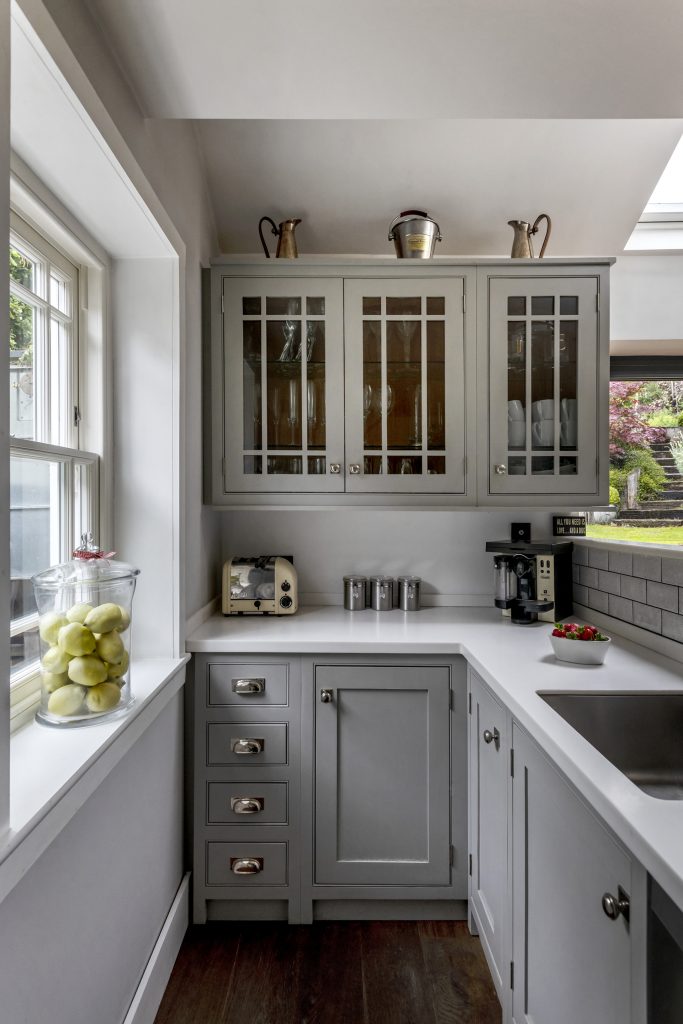
For L-shaped kitchens, I focus on supporting the corner layout while keeping traffic smooth. L-shaped kitchens often combine cooking, prep, and washing areas, so the rug should connect them visually. I like large or shaped rugs that follow the layout and stay comfy underfoot.
I place the rug along the main work triangle, from the sink to the cooking zone or peninsula. Low-pile rugs let cabinets and appliances open easily. Washable rugs are important in kitchens used every day.
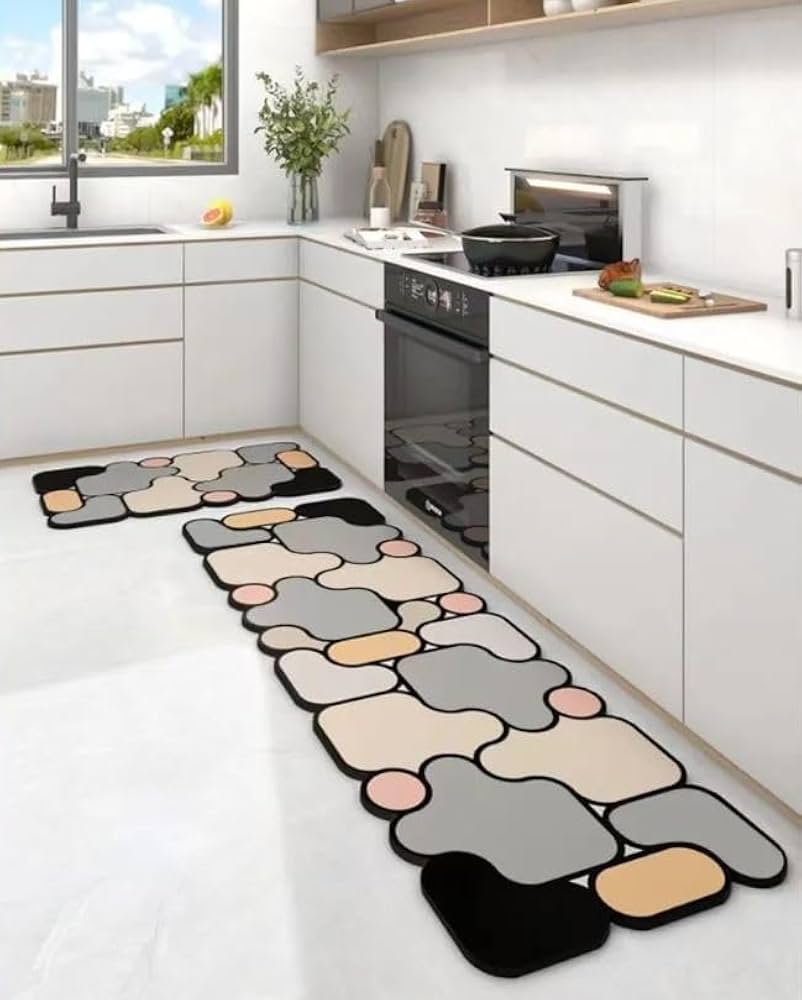
L-shaped kitchens feel more intentional when the rug matches the layout. Many designers say textiles should support the architecture, and I agree. Adding subtle color, like green or muted shades, can bring life to cabinets without overpowering the space.
23. Rugs Under the Table for Dining Areas
Rugs under the table help define dining zones, especially in open kitchens. I treat the dining area as its own space and use the rug as an anchor. Square, round, or long tables all benefit from a rug to separate them from cooking areas.
I make sure the rug goes beyond the table edges so chairs sit stably when pulled out. Round rugs suit round tables, and square or rectangular rugs suit longer tables. I always pick durable, washable rugs for family kitchens.

Rugs under tables encourage people to linger and enjoy meals. Designers note that comfort improves dining experiences, and I’ve seen that work in real homes. To make it perfect, I suggest marking the rug size on the floor before buying to ensure the table and chairs fit comfortably.
24. Rugs Near Sinks for Comfort and Protection
Rugs near sinks are mostly practical. I use them to give comfort during long prep sessions and protect floors from water or spills. They should never block movement or cabinet access.
I pick long or rectangular rugs with non-slip backing and quick-dry fibers. They sit in front of sinks, dishwashers, or counters. Neutral colors or soft patterns work best for functional zones.

Clients notice the comfort immediately. Designers often highlight ergonomics in work areas, and rugs near sinks are an easy solution. Machine-washable rugs help keep things clean. I also recommend pairing a rug with good floor sealing for extra protection in wet areas.
25. Peninsula Kitchen Rugs for Transitional Layouts
Peninsula kitchens sit between open and closed spaces. Rugs help connect the peninsula with the rest of the kitchen while guiding movement. This works well in modern and modern farmhouse kitchens.
I place a large rug under the peninsula stools and extend it into the prep area. Bar stools, tables, and cabinets should relate to the rug placement. Washable, non-slip rugs are essential because these areas see a lot of traffic.
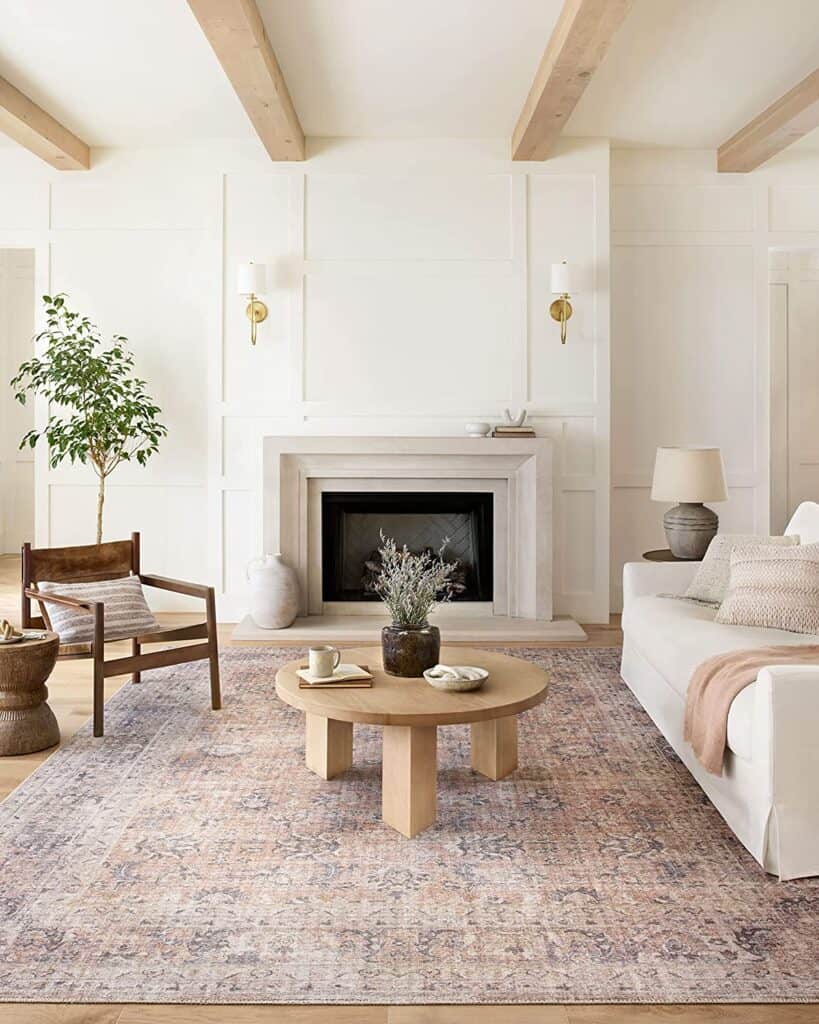
Rugs soften what could feel like a hard transition. Designers say transitional areas deserve attention, . I suggest matching rug colors with countertops or cabinets for a polished look.
26. Shaped Rugs for Unique Kitchen Designs
Shaped rugs are popular in 2026 for homeowners who want personalized kitchens. I use them for unusual layouts, islands, or open kitchens where rectangles don’t fit. These rugs follow the natural flow of the space.
I usually pick custom or uniquely shaped rugs to match furniture and architecture. Curved rugs near a peninsula or irregular rugs in open areas make movement and design more interesting. Non-slip and washable rugs are still a must.

Shaped rugs can become conversation pieces. Designers encourage trying different forms as long as the rug stays practical. I always make sure it works for daily use. I also recommend keeping surrounding decor simple because the shaped rug already makes a statement.