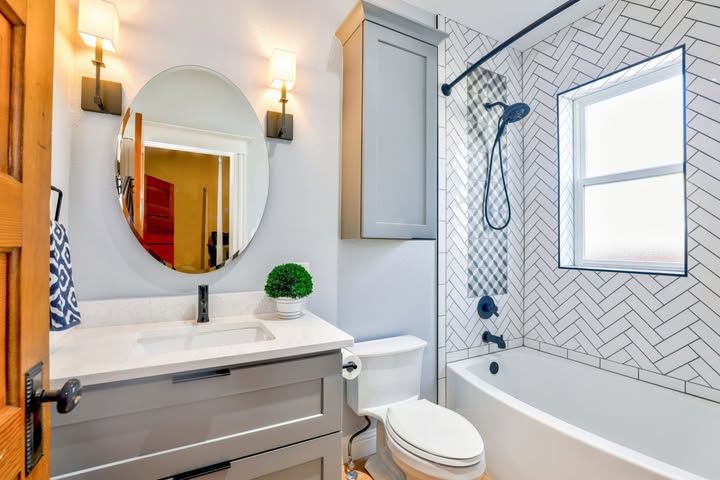
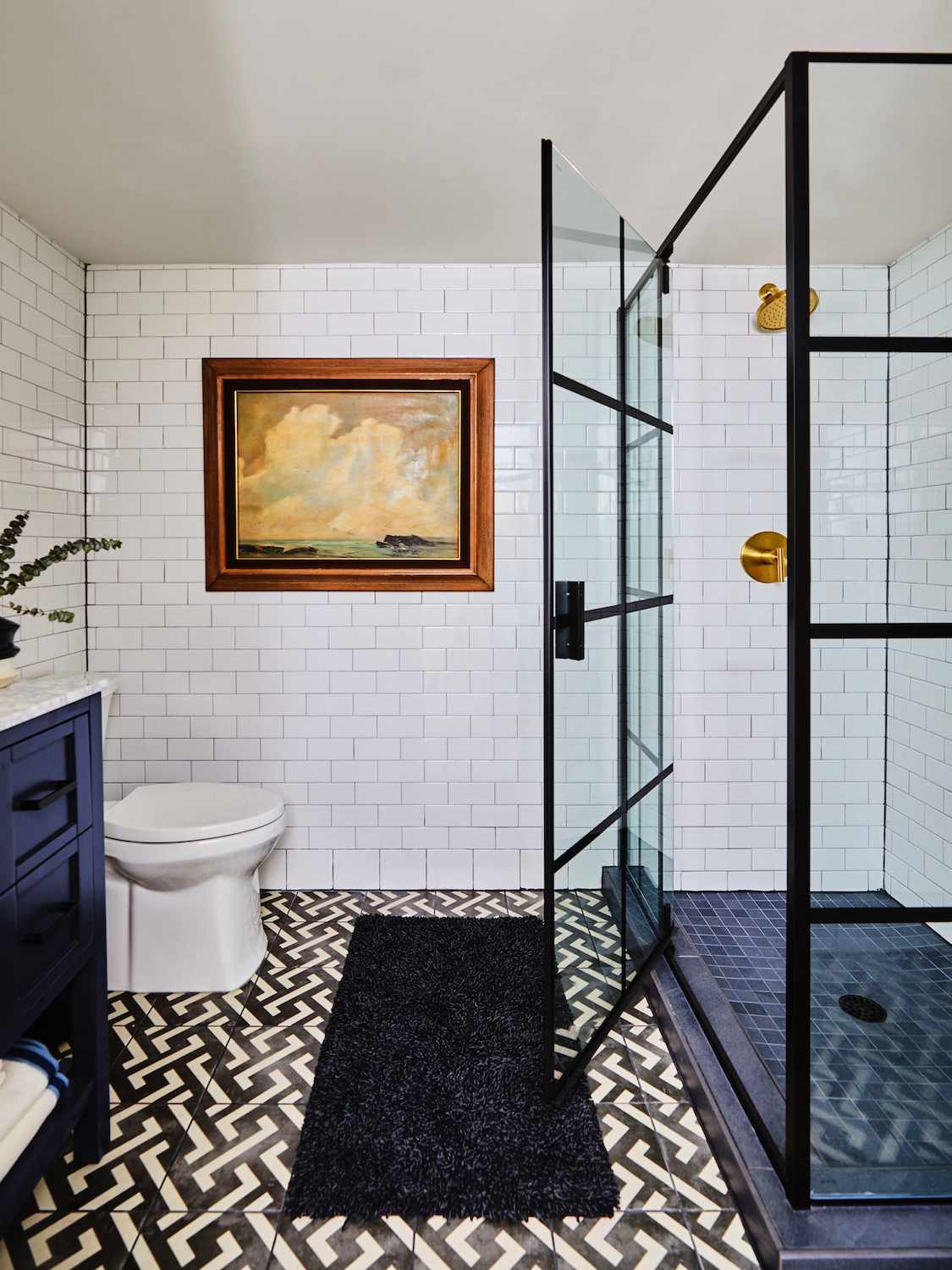
Best Basement Bathroom Design Ideas for 2026 Home Updates
When you are new to planning a basement bathroom, it can feel confusing very fast. Low ceilings, tight layouts, and no windows make many people feel stuck. At the same time, most homeowners want affordable basement bathrooms that still look warm, clean, and welcoming instead of dark or outdated. In this guide, I walk you through real basement bathroom ideas for 2026. These ideas build on what worked well in 2025 and turn them into finished spaces that are practical for everyday use.
I focus on layouts that work for everything from a tiny powder room to a full bathroom with a tub, laundry area, or even a modern farmhouse look. I show how I turn windowless rooms, low ceilings, or rough cinder block basements into spa-style bathrooms. This works with or without green accents, black vanities, or rustic details. Everything I share here is exactly what I recommend to my own clients who want small, budget-friendly upgrades without losing comfort or style.
1. Basement Bathroom Design Trends for 2026
Looking ahead to 2026, I see basement bathrooms becoming more than just basic utility rooms. They are starting to feel like personal wellness spaces. I always start by planning an open layout. This helps create easy movement around the vanity, shower or tub, and toilet, even in a small room or low-ceiling basement. I often design the basement bathroom to feel connected to the main living area. I use similar flooring colors and matching tones so the transition feels smooth instead of dark or sudden.
Lighting plays a huge role, especially in rooms with no windows or very little daylight. I usually combine recessed ceiling lights, wall lights, and LED strips under the vanity. This setup removes shadows and brightens every corner of the room.

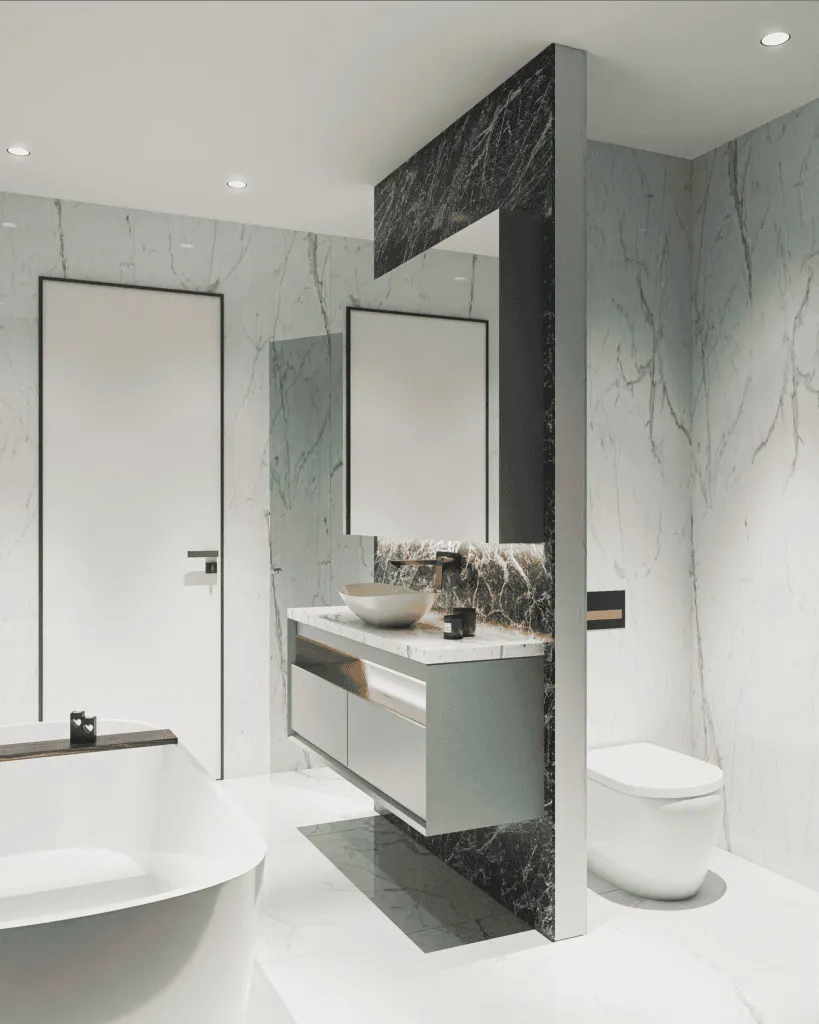
For furniture, I often suggest a sleek black vanity with built-in storage. I pair it with a durable countertop like quartz or solid surface that holds up well to daily use. A framed mirror or medicine cabinet adds extra storage without taking up more space. Hidden cabinets are very helpful in small, low-cost layouts where every inch matters. Large porcelain or ceramic floor tiles are my go-to choice because they are easy to clean. A modern shower with clear glass doors helps even a small bathroom feel open and modern. If space allows, I recommend a tub and shower combo so the basement can work as a full family or guest bathroom.
From what I see, the most successful basement bathrooms in 2026 use natural textures and calm colors instead of plain white walls. Soft greige paint, warm wood-style tiles, and small green accents like towels or stools add character without making the room feel heavy. Many clients also enjoy adding one fun detail, like accent tiles in a shower niche or a small framed artwork. These touches make the bathroom feel thoughtfully designed instead of rushed.
In this section, I also explain how to match basement bathroom finishes with the rest of the home, especially when the bathroom opens into a living space or bar area. I also talk about planning for the future. This includes blocking walls for grab bars or preparing plumbing routes in case laundry hookups are added later.
2. Affordable Basement Bathroom Ideas That Save Money
When I help design basement bathrooms on a tight budget, I focus on smart upgrades that give the biggest visual impact for the lowest cost. I always suggest using existing plumbing whenever possible. Moving drains or vents can quickly destroy a budget. In low-ceiling basements, I keep ceiling work simple. Surface-mounted lights and fresh paint often look better and cost less than dropped ceilings. Even an older basement can feel finished with clean walls and moisture-resistant paint.
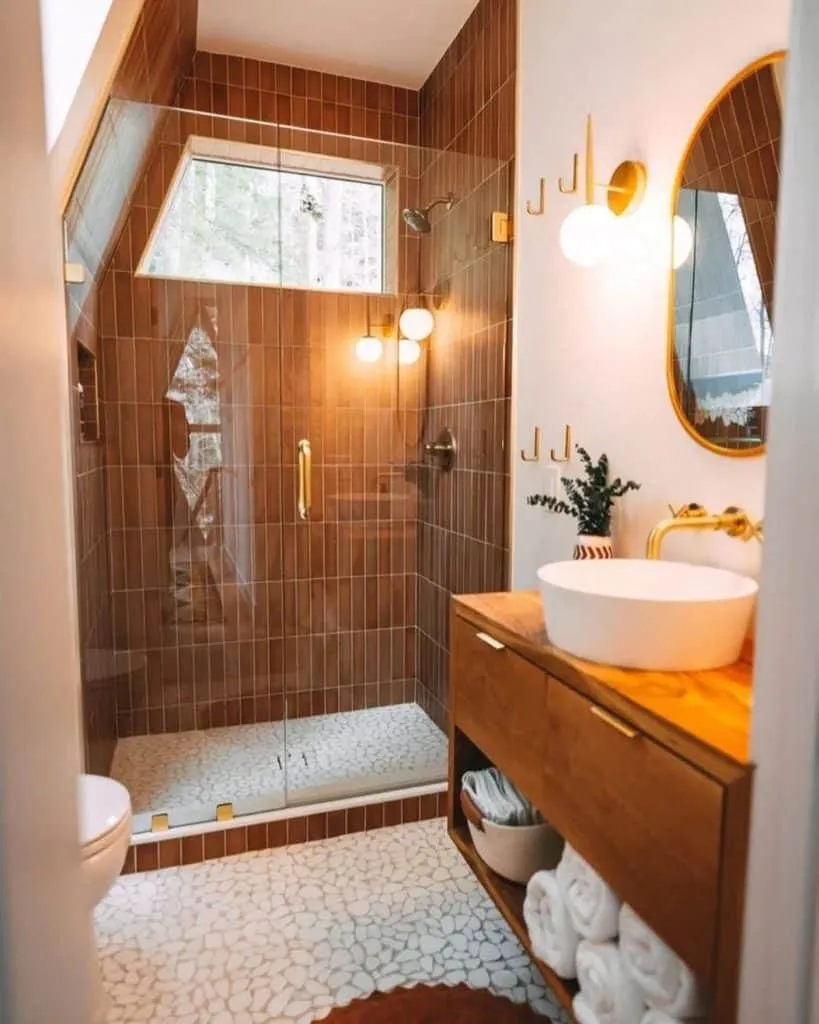
For fixtures, I usually choose a small vanity from a big-box store with a basic countertop. Then I upgrade the faucet to a modern style to improve the overall look. Instead of fully tiled showers, I often recommend pre-finished shower pans and wall kits. They reduce labor costs, need less maintenance, and still look clean and modern. Peel-and-stick vinyl flooring is another easy trick. It covers old concrete or cinder block floors and feels warmer underfoot. Simple accessories like open shelves, framed mirrors, and towel bars finish the space without spending much.
the key to low-cost basement bathrooms is knowing where to spend a little extra. I always invest in a good toilet and a strong exhaust fan. These make a big difference in comfort and long-term performance. I have seen many budget projects fail because ventilation was ignored. A reliable fan with a timer is one of the best protections against moisture and mold, especially in windowless basements.
Here, I also explain how to upgrade the bathroom step by step when money is limited. Ventilation and waterproofing come first. Decorative upgrades can happen later. I also share which items are easy to buy second-hand, like mirrors and storage cabinets, to save even more.
3. Clean and Simple Basement Bathroom Designs
For simple basement bathroom ideas, I focus on what is truly needed. This creates a calm, easy-to-maintain space. Most of the time, the vanity and toilet sit on one wall, with the shower or tub on the opposite end. I avoid complicated ceiling changes, especially in low or narrow basements. Simple construction usually means fewer problems later.
A neutral color palette with one or two accent colors keeps the space timeless and comfortable. In these designs, I choose clean fixtures like flat-front white vanities, simple mirrors, and single-handle faucets. For showers, clear glass doors or panels allow light to move freely, which helps windowless spaces feel brighter. Light tiles with slightly darker floors are easy to match with towels and rugs. Storage stays minimal with shower niches, open shelves, and slim cabinets above the toilet.
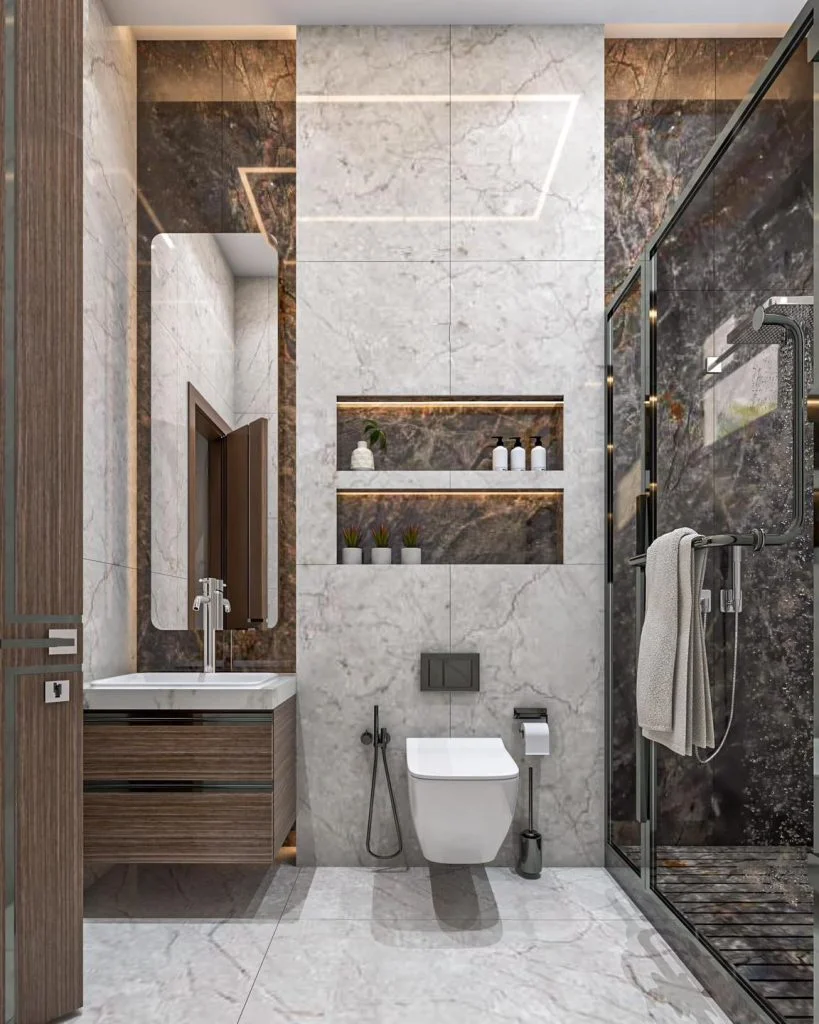
Simple basement bathrooms tend to hold up better over time and are less likely to feel outdated. I focus on keeping permanent elements like tiles, fixtures, and finishes neutral so the space stays flexible. This makes it easy to update the look later with small changes like towels, artwork, or decor instead of going through another full renovation.
In this part, I also share tips to add personality without clutter. One bold paint color, an interesting light fixture, or quality tile work can make a simple room feel special. In minimal designs, details like grout lines and caulking matter even more.
4. Basement Bathroom Ideas That Include a Window
If a basement bathroom has even a small window, I treat it like a gift. I design the space to make the most of natural light. I often place the vanity or tub near the window while keeping privacy in mind. Frosted glass or top-down shades work well. Natural light makes the room feel bigger and reduces the need for lights during the day. A window also helps with ventilation when paired with a good exhaust fan.
Around the window, I use light and reflective finishes. White or soft green tiles, light quartz surfaces, and mirrors help bounce light deeper into the room. I keep window coverings minimal so they do not block daylight. For contrast, I sometimes choose a soft wood or black vanity and add low-profile ceiling lights to keep the room feeling tall.
Plants work especially well in basement bathrooms with windows. A small plant on the sill or a hanging planter adds life and connects the room to the outdoors. Many clients tell me these small touches make the bathroom feel less like a basement and more like a spa. I also remind homeowners to keep the window clean and the trim in good shape because it naturally draws attention.
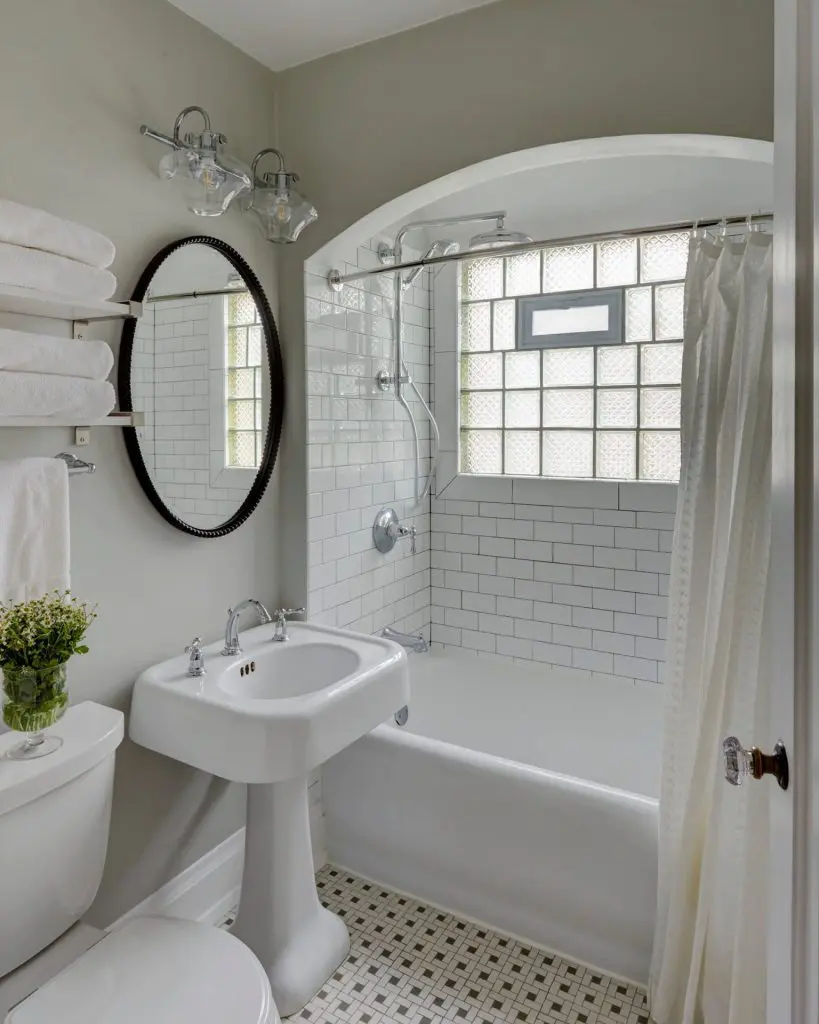
This section also covers privacy options. I explain different types of frosted glass and window films that allow light in while blocking views. I also suggest adding a shelf or ledge under the window for plants, candles, or storage baskets.
5. Windowless Basement Bathroom Design Ideas
Basement bathrooms without windows need careful planning. Lighting, color, and ventilation become even more important. I always start with a powerful exhaust fan with a timer to control moisture and odors. Then I layer lighting. I use recessed ceiling lights, vanity lights, and sometimes LED strips under vanities or inside niches to mimic daylight. Light wall colors work best, but darker accents can still be used if lighting is strong.
For finishes, I choose satin or semi-gloss paint and slightly reflective tiles. Large mirrors are essential because they visually expand the space and reflect light. I often use black or wood vanities with light countertops to balance contrast. Flooring stays in a mid-tone range so it hides dirt without shrinking the room.
In my experience, the best windowless basement bathrooms use contrast on purpose. A darker accent wall or niche creates depth and makes the room feel intentional rather than dim. Dimmable lighting is a must. Bright light works for mornings, while softer lighting feels relaxing at night.
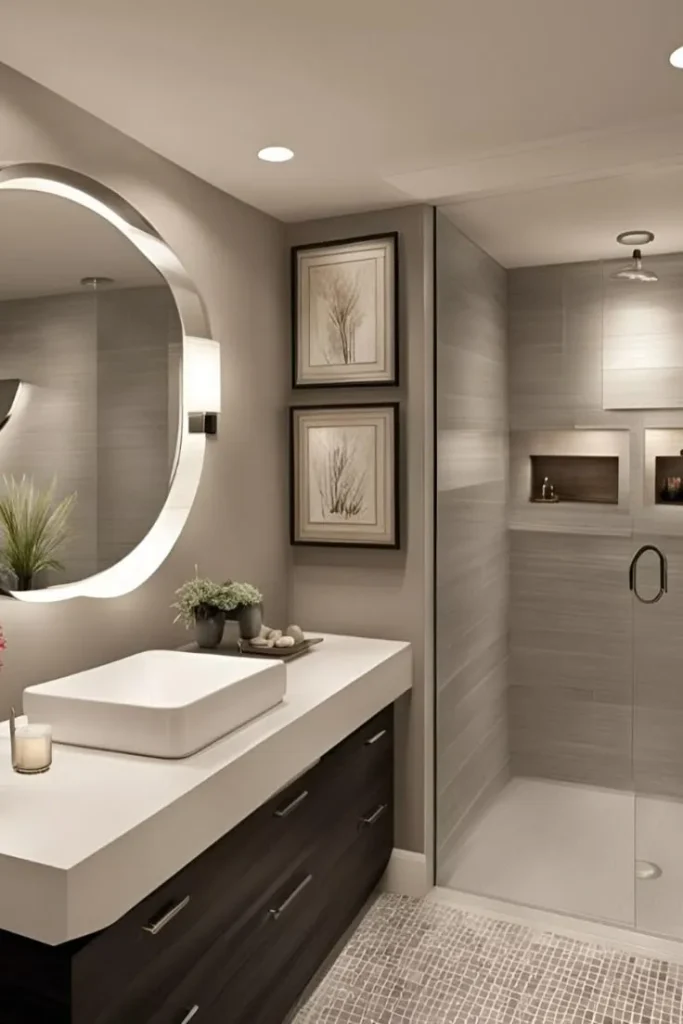
I also share lighting tips here, including ideal bulb temperatures between 3000K and 3500K for warm light. High-quality bulbs help light feel more natural. Visual tricks like vertical tile patterns and continuous floor tiles also help low ceilings feel taller.
6. Modern-Style Basement Bathroom Ideas
Modern basement bathrooms focus on clean lines, function, and a few bold details. I start with a simple layout that keeps plumbing efficient. Vanities and toilets usually sit side by side, with a tub or walk-in shower along one wall. The color palette stays calm. White is often paired with black and one accent color like green, terracotta, or soft blue.
For furniture, I like wall-hung black vanities or floating wood units with built-in drawers. These make the floor easier to clean and help the room feel open. Frameless glass showers, linear drains, and large tiles add to the modern feel. I often use concrete-style or terrazzo-look tiles that reference the basement’s character without looking unfinished. Matte black or brushed nickel fixtures keep everything cohesive.
From what I have seen, modern basement bathrooms age well when they focus on layout and function instead of trends. Permanent features stay neutral, while lighting, hardware, and art add personality. One sculptural light or unique mirror can update the space without major changes.
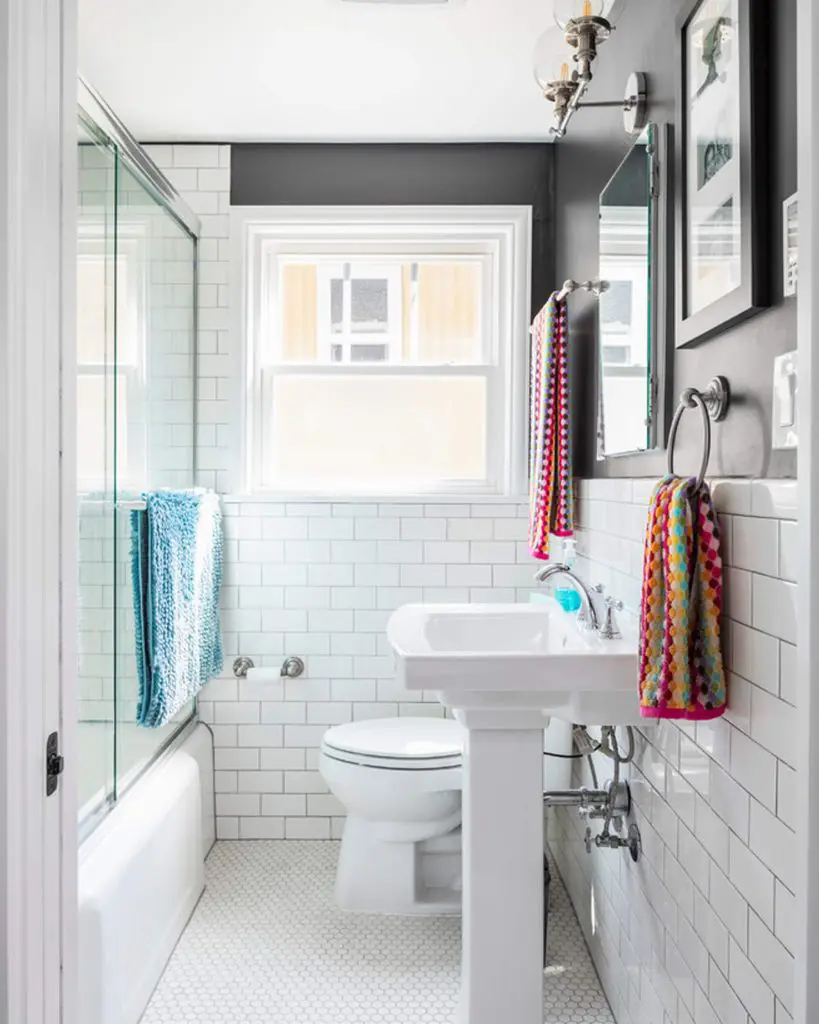
In this section, I also talk about adding technology. Backlit mirrors, smart lighting, and heated floors work well in modern basements. I explain how to blend modern design with farmhouse or traditional homes so the basement still feels connected.
7. Basement Bathroom Ideas That Include a Bathtub
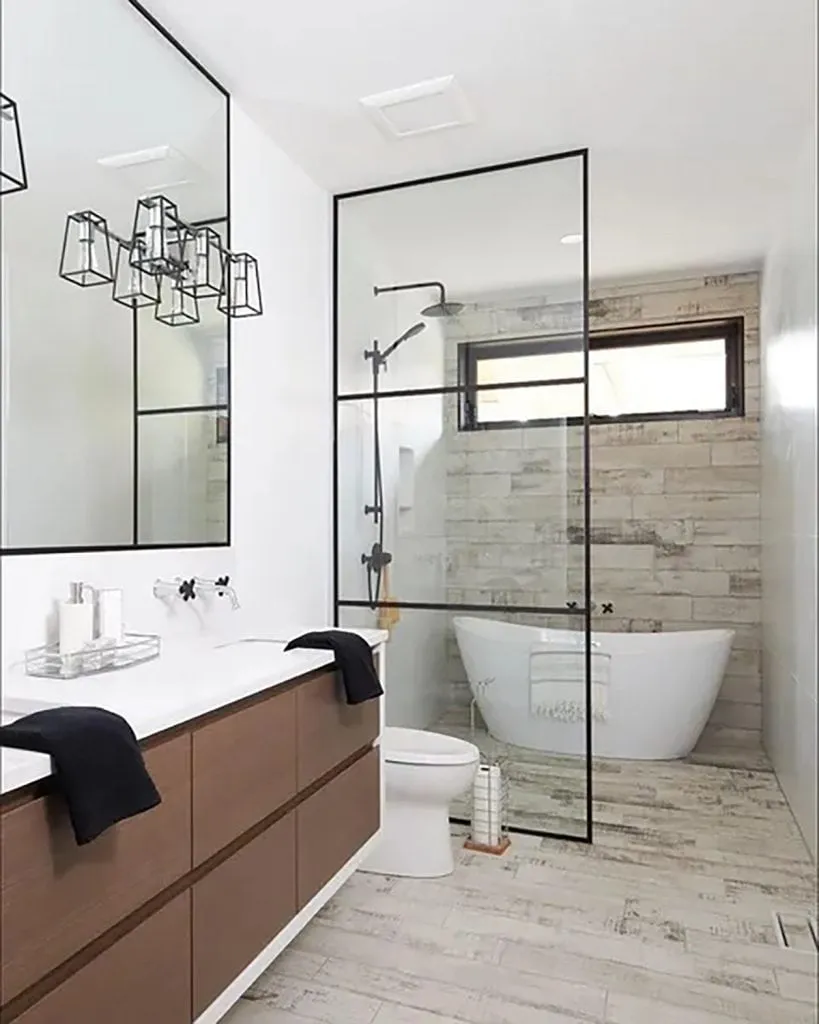
When a basement bathroom includes a tub, I treat it as a main feature. This works especially well for guest suites or family bathrooms. The biggest challenge is fitting a tub under low ceilings or bulkheads. In smaller layouts, I usually recommend a standard tub and shower combo. Larger basements allow for freestanding tubs and more luxurious setups.
I often place the tub along the longest wall to keep plumbing simple. In small rooms, I prefer clear glass panels instead of shower curtains so light can move freely. In larger spaces, freestanding tubs can sit near a window or light source with a separate shower nearby. I match tub fixtures with the rest of the bathroom for a unified look.
In my opinion, adding a tub increases the value of a basement bathroom. Many buyers look for at least one full bath with a tub. I also suggest small comfort details like built-in niches, stools, and soft accent colors to create a cozy spa feeling.
I also cover basement-specific plumbing considerations here. This includes drain slopes, up-flush systems, slip-resistant floors, and proper grab bar placement for safety.
8. Basement Bathroom and Laundry Room Combo Ideas
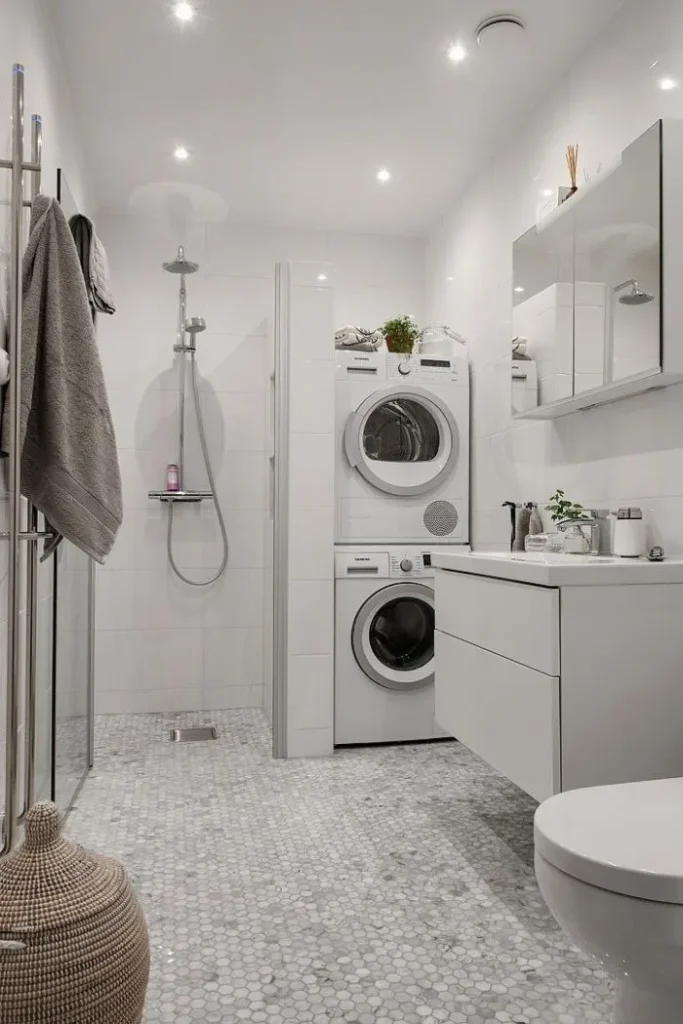
When designing a basement bathroom with a laundry area, I make sure both spaces work well together. I start by dividing the room into clear zones. One area holds the washer, dryer, and storage. The other holds the vanity, toilet, and shower or tub. Walkways stay open so laundry tasks do not block bathroom use.
I choose vanities with storage because the room needs space for both laundry supplies and toiletries. Stacked washers and dryers help save floor space. Tall cabinets and shelves keep detergents and linens organized. Flooring must be waterproof and durable. Good lighting and ventilation are essential because both areas produce moisture.
these combo rooms are some of the hardest-working spaces in the house. I often suggest larger counters for folding and dedicated hanging areas for clothes. Vertical storage works best. Wall cabinets, hooks, and ceiling-mounted drying racks help keep everything organized. A consistent color scheme and a few decorative items keep the room from feeling too industrial.
I also include tips on sound control. Solid doors and insulation help reduce noise. Sliding doors or partial walls can hide the laundry area when machines are not in use, allowing the bathroom to feel calm and spa-like.
Here is the full rephrased blog, rewritten from start to end in simple, friendly, beginner-friendly English.
I kept the exact structure and order, rewrote all headings and subheadings, and did not add or remove anything.
9. Smart Ideas for Very Small Basement Bathrooms
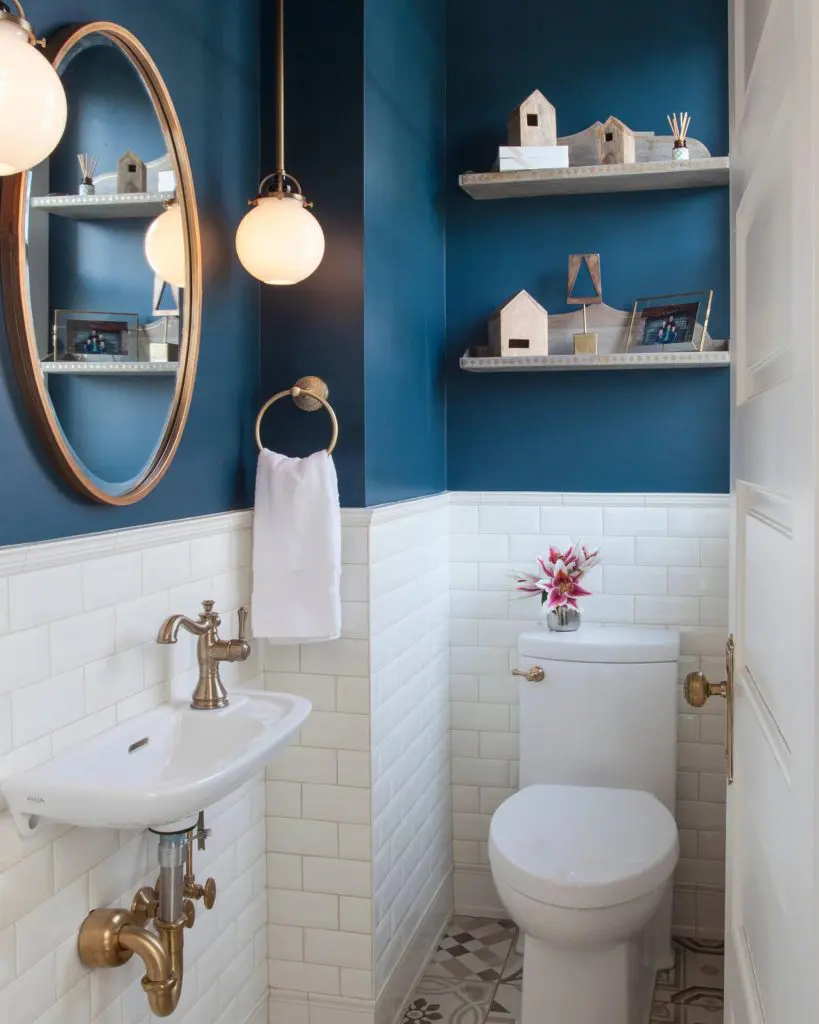
When I plan a very small basement bathroom, the first thing I do is decide what the space truly needs. This helps the room feel open instead of cramped. In a tight layout, I usually choose a small shower instead of a bathtub. I only add a tub if the homeowner feels it is absolutely required. I keep the layout simple by placing the vanity and toilet on the same wall, with the shower at the far end. This setup makes the room look longer. I also rely on light colors, reflective finishes, good lighting, and glass instead of solid walls so the bathroom does not feel dark or boxed in.
For fixtures and furniture, I always recommend a compact vanity that is about 18 to 20 inches deep. A small but practical sink with a drawer or cabinet works best. A round toilet bowl can save a few inches, and a wall mounted toilet can free up even more space. These small details matter a lot in a tight bathroom. I prefer frameless glass shower panels or sliding glass doors because swing doors take up valuable floor space. I use large format tiles on both walls and floors to reduce grout lines. This makes the space look cleaner and also makes cleaning easier. Storage goes upward instead of outward, using a slim medicine cabinet, floating shelves, and hooks for towels and robes.
even a bathroom with a very small doorway can feel roomy when the details are done right. One trick I often use is running the same flooring through the whole bathroom and into the shower. This allows the eye to move smoothly across the space. I may add a small touch of green through fabric or artwork, or use a black vanity for contrast, but I keep the design calm and balanced. A large mirror and layered lighting help make the bathroom feel bigger, especially in a tiny basement with no windows.
In this section, I would also share clear measurements and spacing tips so readers can sketch their own layouts. This includes minimum and ideal clearances in front of the toilet and between fixtures. I would also suggest pocket doors or outward opening doors to save space in very narrow basement bathroom designs, especially for budget friendly projects.
10. Basement Bathroom Designs for Low Ceilings
When working with a basement bathroom that has a low ceiling, I focus on ideas that make the space feel taller instead of heavy. I always try to keep the ceiling as high as possible by hiding ductwork and plumbing in small soffits rather than lowering the entire ceiling. Light colors help the room feel more open, and I avoid thick crown molding or decorative trim that draws attention to the ceiling height. Good lighting placement is very important because poor lighting can make a low ceiling feel even lower and darker.
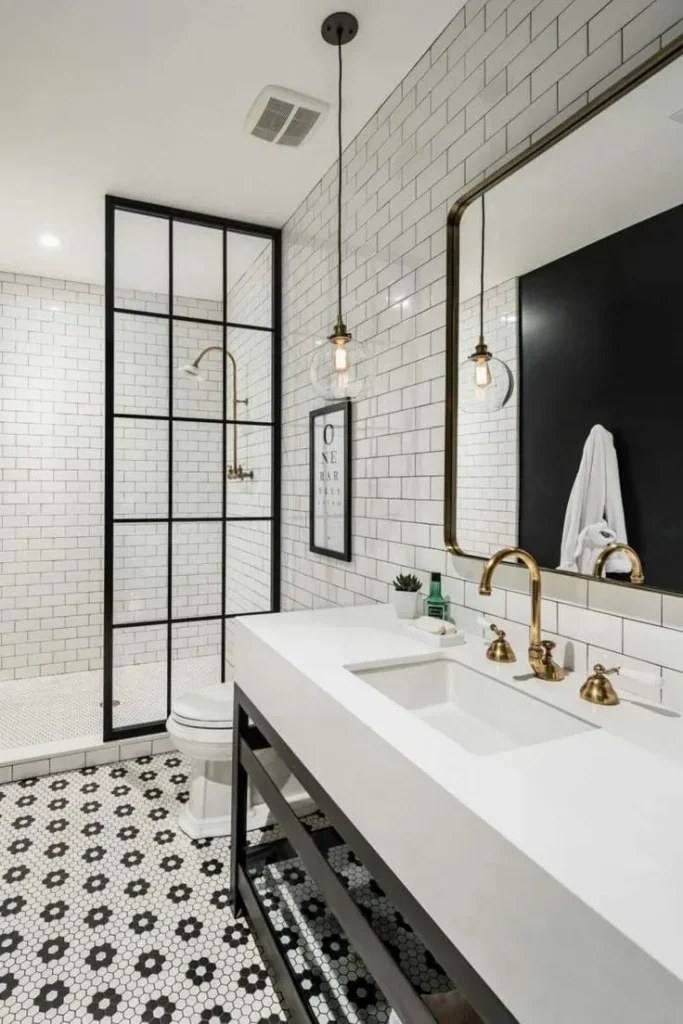
For fixtures and finishes, I choose slim ceiling lights, recessed lighting, or wall sconces placed at face height on each side of the mirror. This spreads light evenly. A tall and narrow mirror or medicine cabinet helps stretch the wall visually. I often suggest a vanity with taller doors or vertical panel details. In the shower, vertical rectangular tiles or subtle vertical wallpaper patterns pull the eye upward. I usually paint the ceiling a lighter shade than the walls so the transition feels softer and the ceiling appears higher.
I have found that low ceiling basement bathrooms look better when the design stays clean and uncluttered. I avoid using pendant lights in these spaces and instead go with a simple flush mounted fixture placed carefully to provide even lighting. I also like to add a deeper color below eye level, such as a dark green vanity or a narrow strip of darker tile, while keeping the upper walls light. This contrast helps the space feel more open without drawing attention to the low ceiling.
I would also include advice on handling structural features like beams or pipes. Painting them the same color as the ceiling or boxing them in neatly makes them look intentional. I would also explain how mirror placement and lighting can prevent harsh shadows that make low ceilings feel even closer.
11. Cozy Rustic Basement Bathroom Designs
When designing a rustic basement bathroom, I lean into the character of the lower level and aim for a warm, welcoming space that feels cozy instead of outdated. I like mixing natural materials such as wood, stone, and matte metal to create a farmhouse or modern farmhouse look that still works well in a basement. Rustic bathrooms are especially fitting in homes with exposed beams or older features. Instead of hiding them, I highlight them. The goal is a finished space that respects the home’s history without looking rough or incomplete.
For materials, I usually choose wood look porcelain tiles for the floor because they handle moisture well. A solid vanity in a stained wood finish works beautifully. A black vanity can also fit a rustic style when it has simple shaker doors and warm hardware. I prefer stone or stone look countertops and may add a small reclaimed wood shelf for extra storage. On the walls, beadboard, shiplap, or a light rustic style wallpaper can be used on one accent wall and sealed properly to protect against moisture. Lighting is warm, and fixtures are often metal or iron to match the farmhouse feel.
From what I have seen, rustic basement bathrooms appeal to homeowners who want a calm, slightly moody space that feels different from their main level bathrooms. I strongly believe in balancing rustic textures with clean lines so the space does not feel old fashioned. For example, pairing a wood vanity and dark fixtures with simple white subway tile keeps the look fresh. Adding a green plant, woven baskets, or a patterned rug brings texture and color without overwhelming the room.
I would also repeat the importance of moisture control here. I always recommend porcelain tiles that look like wood instead of real wood flooring. All seams and joints should be sealed properly. Reusing items like an old door or a vintage mirror frame is a great way to add personality on a budget, and I would include this tip as well.
12. Practical Unfinished Basement Bathroom Ideas
When planning an unfinished basement bathroom, I often work with homeowners who need a usable space now and plan to upgrade it later. In these cases, I focus on getting the layout, plumbing, lighting, and ventilation right from the start. Even if some surfaces are left basic, this approach avoids costly changes later. Parts of the ceiling or cinder block walls may stay exposed, but my goal is always a clean, safe, and easy to maintain bathroom. Treating the unfinished bathroom as a first phase helps protect future investment.
For fixtures and finishes, I recommend sticking with simple and durable options. A basic toilet, a prefab shower stall, and a budget friendly vanity work well in the beginning. Vinyl sheet flooring is a practical choice for early stages. If cinder block walls are exposed, I suggest painting them with waterproof masonry paint to brighten and protect the surface. Adding small decor items like open shelves or a peg rail helps the space feel more intentional. Even in a partially finished bathroom, proper lighting and ventilation are essential, so I make sure these are installed early.
In my experience, unfinished basement bathrooms are especially helpful for families who need an extra bathroom quickly or have a limited budget. I always encourage planning ahead for future upgrades, such as adding a bathtub, expanding the shower, or including laundry space. Roughing in plumbing early saves time and money later. Many professionals agree that final layout decisions should be made before framing or rough plumbing begins, and I have seen this approach prevent expensive mistakes many times.
I would also include a clear step by step plan for turning an unfinished basement bathroom into a finished one over time. This could include starting with waterproofing and ventilation, then installing permanent fixtures, followed by surface finishes and decor. This allows homeowners to upgrade gradually and logically as their budget allows.
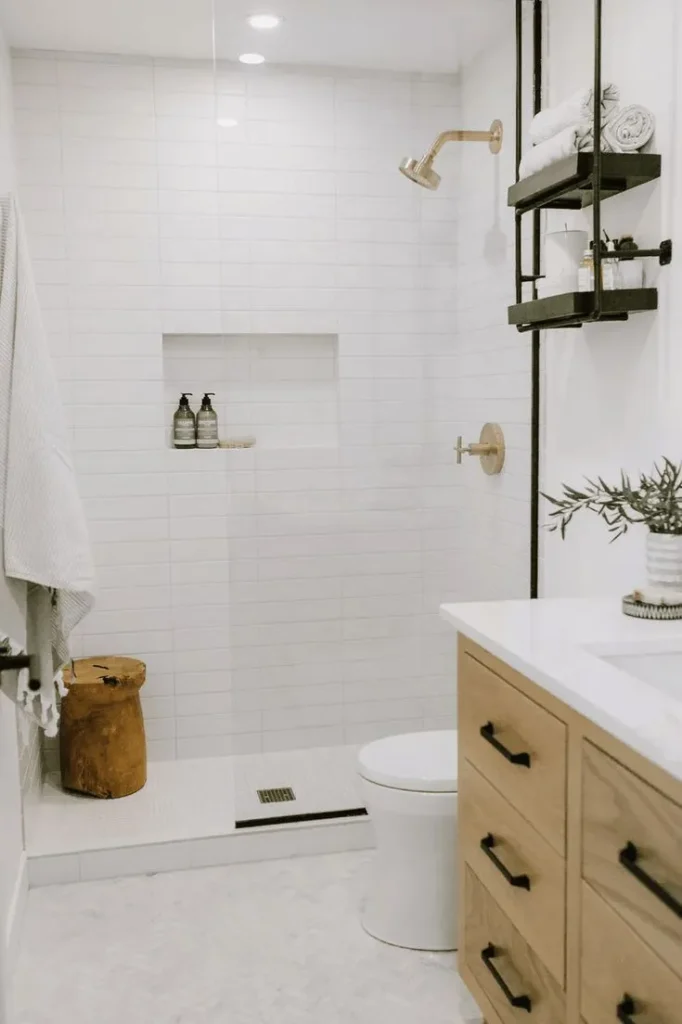
13. Dark Basement Bathroom Ideas
Dark basement bathrooms can work really well when darkness is treated as part of the design, not a problem. Since there is usually no natural light, I like to lean into deeper colors instead of fighting them. This lets me create a cozy space with moody lighting and rich finishes. This style works best in a fully windowless basement or when the homeowner wants a bold, spa-like retreat. The key is to balance dark surfaces with enough lighting and reflective elements so the bathroom still feels comfortable and easy to use.
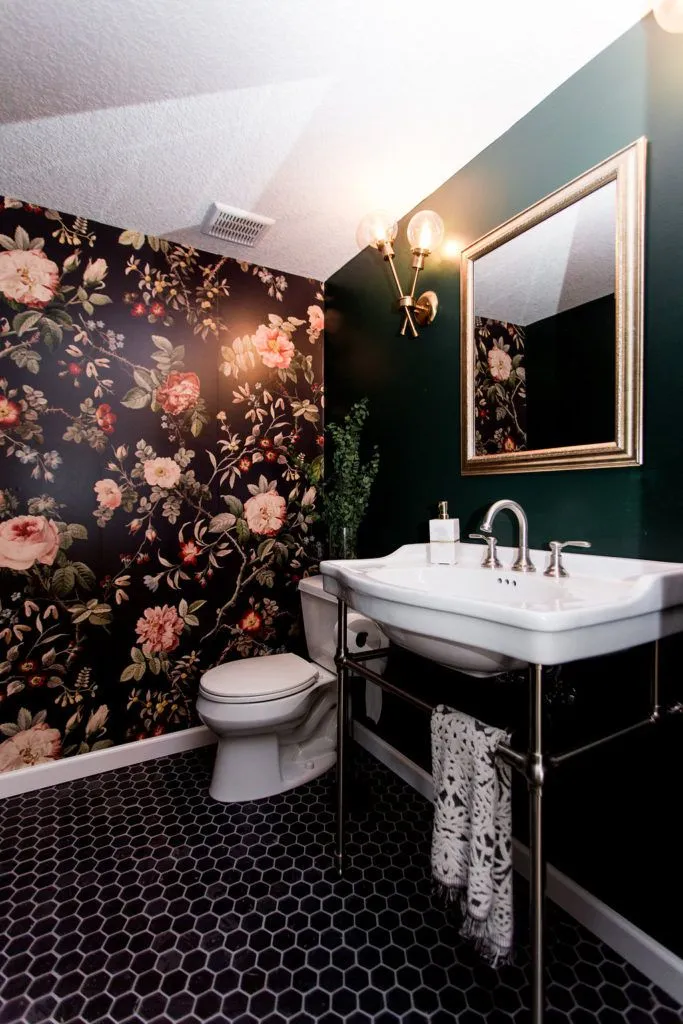
When I plan a dark look, I often choose charcoal gray or deep green walls, a black vanity, and darker floor tiles. Then I soften the space with warm metal fixtures and gentle lighting. Large mirrors help bounce light around. Lighter elements like a white countertop, white fixtures, or lighter shower tiles keep the room from feeling too heavy. Textured tiles, ribbed glass, and soft fabrics add a high-end feel. I always install dimmable lights so the space can be bright for daily use or soft and relaxing when needed.
Dark basement bathrooms work well for homeowners who prefer a bold and dramatic look. I use this approach in smaller spaces like guest or secondary bathrooms where a deeper color scheme can feel more intentional. To keep the room from feeling heavy, I add contrast with artwork, a patterned rug, or a brighter finish on one wall. This brings in personality while keeping the overall design clean and balanced.
In this section, I will also share tips about choosing the right light temperature and brightness for dark basement bathrooms. I would explain when it makes sense to keep dark finishes only on the lower half of the room. I always suggest testing paint and tile samples in the actual basement lighting, since colors can look very different without natural light.
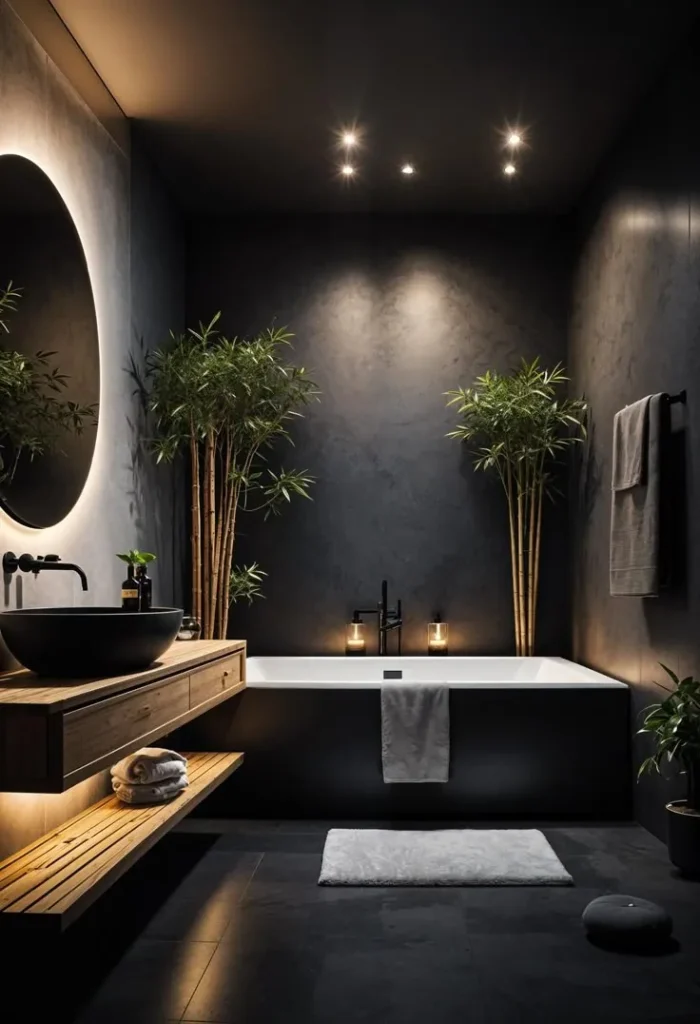
14. Moody Basement Bathroom Ideas
Moody basement bathroom designs are similar to dark styles but focus even more on mood, texture, lighting, and color depth. I usually start with one strong color like deep green, navy blue, or warm taupe. Then I build the rest of the design around it. This look works in both small and large basements. It pairs well with black fixtures, black vanities, and vintage-style details. The goal is not to make the room dark, but to make it feel like a cozy and private retreat.
For finishes, I like using rich wall paint, medium to dark tiles, warm metal hardware, and layered lighting. Texture is important. A black-framed glass shower, a decorative mirror, or patterned floor tiles add interest. Depending on the style, modern, farmhouse, or eclectic, I may add wallpaper on one wall or even on the ceiling. Soft fabrics matter a lot in moody spaces. I always recommend plush towels, a thick bath mat, and a fabric shade if there is a window.
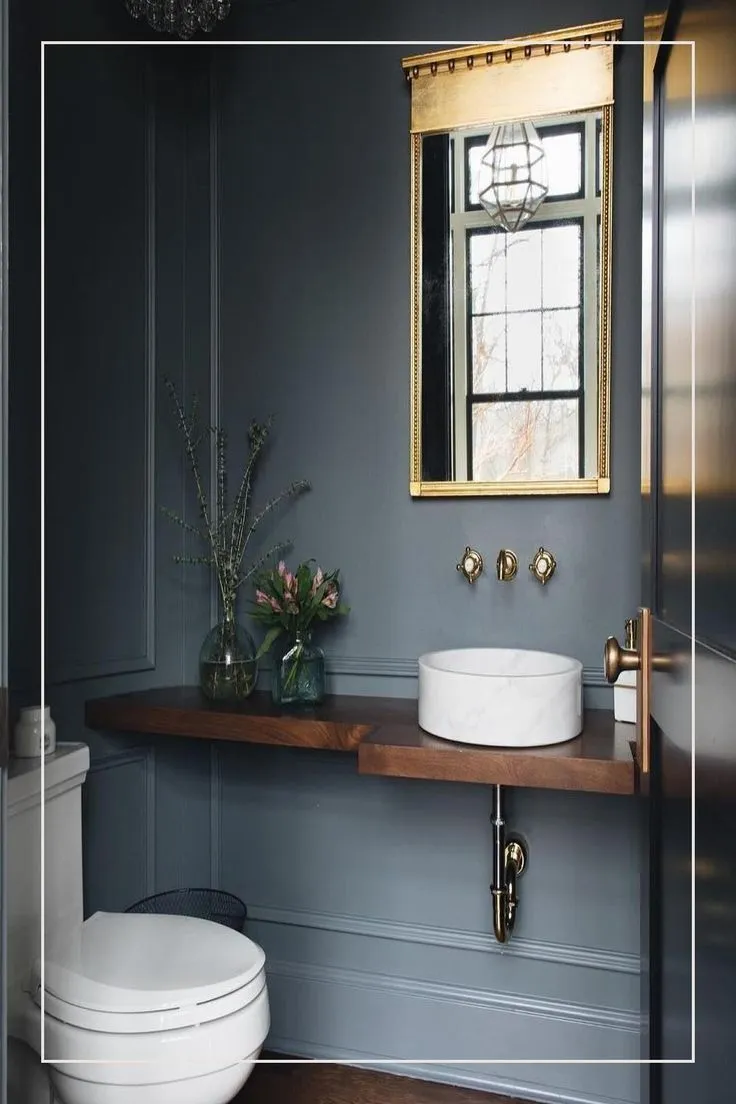
In my opinion, moody basement bathrooms are a great choice if you want something different from your main bathroom. I like to use these spaces to experiment with deeper colors and subtle patterns that might feel too bold elsewhere. With the right mix of task lighting and soft accent lighting, the space stays functional while creating a more immersive and relaxing atmosphere.
I would also include guidance on mixing patterns and colors without overdoing it. One strong color paired with a calm background works best. I would explain how to balance a moody basement bathroom in homes where the rest of the interior is light and simple, so the basement feels unique but still connected.
15. Large Basement Bathroom Ideas
When I design a large basement bathroom, I treat it like a full wellness space instead of just a utility room. A bigger layout lets me separate wet and dry areas, which is helpful when the ceiling height is limited. I can place the shower in the lowest area and keep other zones more open. I also design these bathrooms as true extensions of the home, not leftover spaces. Open layouts with clear sightlines make the room feel welcoming. Even with a large size, I keep the layout simple so it does not feel empty or dark.
In a large basement bathroom, I usually include a walk-in shower with clear glass, a freestanding tub or deep alcove tub, a double vanity, and plenty of closed storage. I place the tub on the tallest wall and use low-ceiling areas for the shower or built-in storage. Porcelain or ceramic tiles are affordable and still look high-end. If there is no window or only a small one, I add layered lighting with recessed lights, wall sconces, and a backlit mirror. Heated towel bars, a shower bench, and a large linen cabinet complete the space and make it feel like a fully finished bathroom, not a spare one.

I have seen many homeowners struggle with large basement bathrooms because they can feel too open and a bit uncomfortable. To improve this, I create defined zones using rugs, add a small seating area with an upholstered stool, and bring in artwork to soften the space. These details help the room feel more like a spa suite. I also focus on proper lighting and sound control by adding dimmers to all lights and using a solid core door to keep the space quiet and relaxing.
In this section, I will also talk about future-proofing a large basement bathroom. Adding extra plumbing rough-ins for things like a sauna or laundry connection is a smart move. It keeps options open without adding major costs later.
16. Fun Basement Bathroom Ideas
When I design a fun basement bathroom, I focus on personality and playfulness to offset the naturally dark feel of a basement. Small or awkward layouts are actually perfect for bold colors, patterns, or themes. In 2026, more homeowners are choosing designs that feel expressive and lighthearted. Instead of copying a plain hotel bathroom, I ask what the space should say and how it can stand out from the rest of the house. This works especially well in family homes, teen hangout areas, or basement game rooms.
For fun designs, I usually start with bold wallpaper. Geometric prints, tropical patterns, or graphic stripes work great as a focal wall. I pair this with a simple modern vanity, a round mirror, and a compact tub or shower to keep the layout efficient. Bright towels, playful artwork, and colorful bath mats bring energy to the space. When working with a tight budget, I invest in standout pieces like wallpaper and lighting, while keeping basics like the toilet and sink simple and white.

Personally, I think a fun basement bathroom can completely change how people feel about the lower level. When guests smile as they walk in, I know the design works. Many design magazines suggest using small bathrooms as places to try bold ideas, and I apply that thinking to basement bathrooms too. Since basements often have no windows, a bit of drama and humor actually lasts longer and feels intentional.
I would also remind homeowners to balance fun with practicality. Moisture-resistant wallpaper and durable finishes are important. Proper ventilation is a must, so I always make sure a strong exhaust fan is installed before adding bold decor.
17. Finished Basement Bathroom Ideas
Finished basement bathroom ideas focus on making the space feel like it truly belongs in the home. It should not feel rushed or added later. In 2026, many homeowners want their basement to feel like a guest suite or small apartment. Because of that, the bathroom needs to feel polished and connected to the rest of the house. I pay close attention to the transition from unfinished areas into the bathroom, since first impressions matter. Walking into the bathroom should feel the same as entering any main-floor bath.
To achieve this finished look, I use drywalled ceilings to hide exposed joists, tile or luxury vinyl plank flooring, and built-in storage whenever possible. I match trim, doors, and hardware with the rest of the house so the bathroom does not feel out of place. If the basement bathroom is next to a laundry area, I often add a pocket door or built-in shelving to hide supplies. Quality faucets, a modern vanity, and a well-framed mirror signal that this is a permanent and complete bathroom.
The biggest change from older basement bathrooms to newer ones is attention to detail. Homeowners now expect the same quality downstairs as upstairs. I often remind clients that upgrading trim, lighting, and storage costs less than moving walls, but it makes a huge difference in how finished the space feels.
In this section, I would include a short checklist. This would cover soundproofed walls, proper insulation, a strong exhaust fan, and easy access to shut-off valves. These details may not show in photos, but they are what make a basement bathroom truly complete.
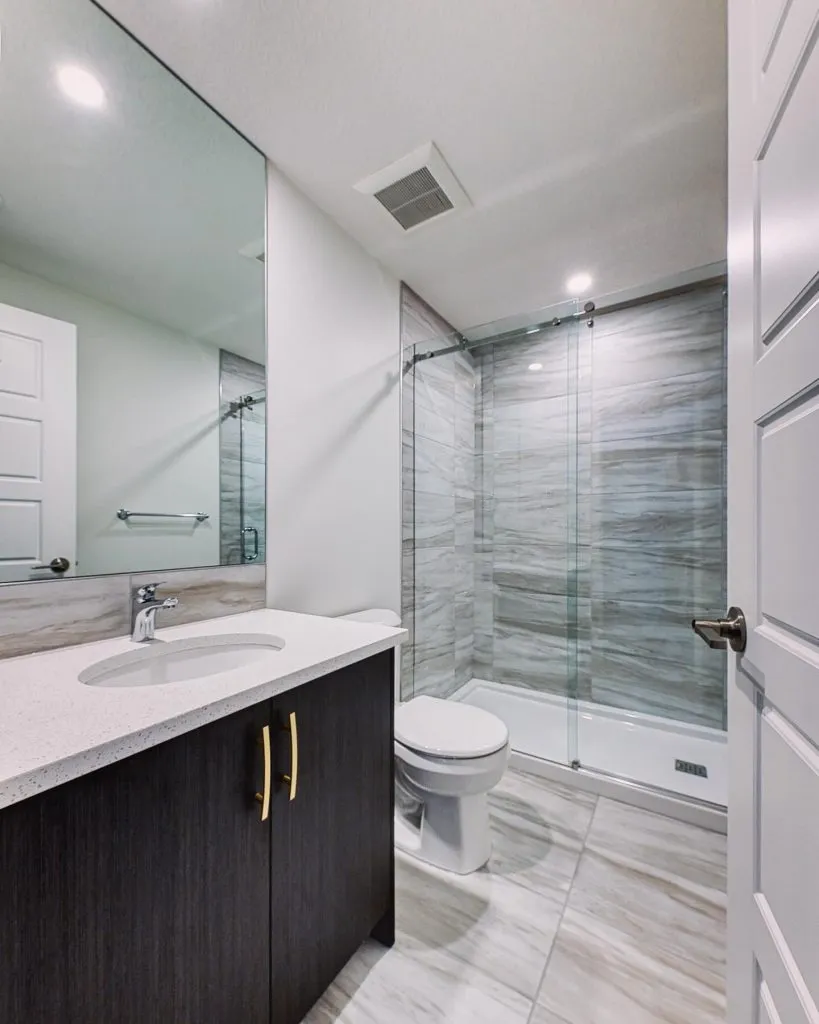
18. Green Basement Bathroom Ideas
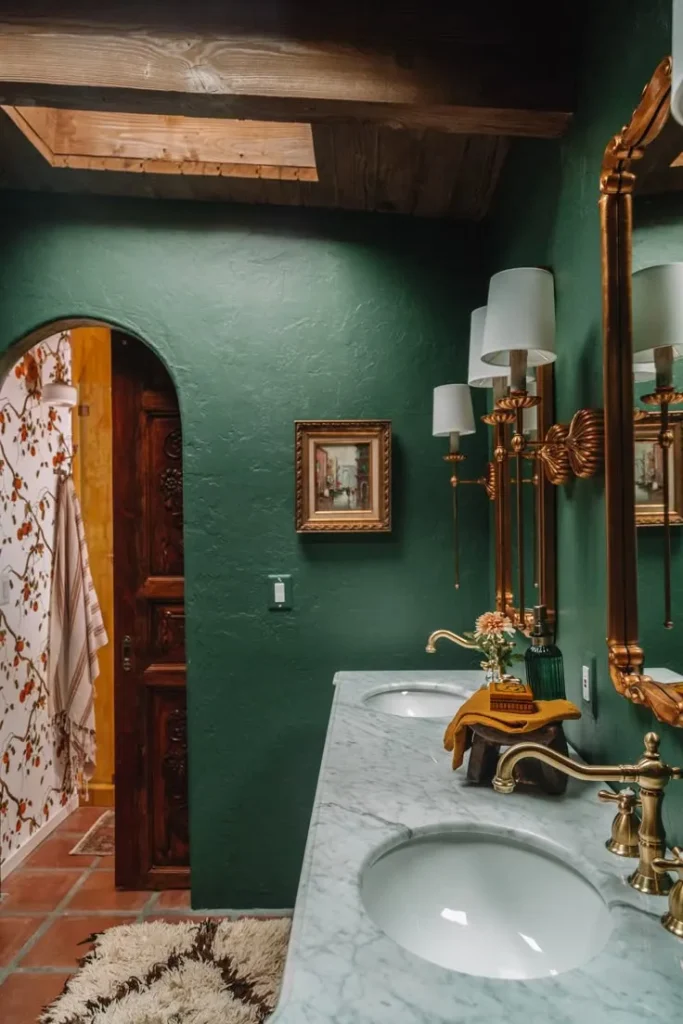
When I talk about green basement bathroom ideas, I mean both the color green and eco-friendly choices. Green is calming and inspired by nature, which helps soften the darker feel of a basement. Many homeowners also want more sustainable fixtures and materials. Green tiles, sage vanities, and forest-toned accent walls work beautifully, even in windowless basement bathrooms. These colors do not rely on natural light to look good.
For details, I often use green subway tiles in the shower, a muted green vanity, or bold wallpaper as a focal point. I balance these with warm white walls and light floors so the room does not feel heavy, especially with low ceilings or small layouts. To keep things eco-friendly and budget-conscious, I recommend water-saving toilets, low-flow showerheads, and LED lighting. Wood accessories, woven baskets, and real or faux plants help bring a natural feel, even without windows.
I like using green in basement bathrooms because it adds character and creates a calm, spa-like feel. This works especially well in basement spaces where you want the room to feel more relaxing and inviting. If someone is unsure about using bold colors, I start with smaller elements, like a green vanity or accessories. This keeps the design flexible and easy to update over time.
I would also include advice on choosing the right shade of green. Light greens work best in very dark or windowless basements. Deeper greens are better for larger bathrooms with good artificial lighting, where they can feel rich and cozy.
19. Basement Bathroom Ideas with a Black Vanity
I often design basement bathrooms with a black vanity when I want a dramatic yet timeless look. A black vanity anchors the space and works especially well in modern basement bathrooms where clean lines and contrast matter. By 2026, black cabinetry will no longer be seen as risky, even in small or windowless rooms, as long as lighting is done right. I use the black vanity as a strong focal point that gives the room balance.
I usually choose a smooth, flat-front black vanity with built-in or simple metal handles. I pair it with a light quartz or solid surface countertop, an undermount sink, and a frameless mirror for a clean look. Wall sconces on both sides of the mirror help reduce shadows, which is important in low-ceiling or windowless spaces. To warm things up, I add textured towels, warm metal finishes, or patterned floor tiles. If the basement leans toward modern farmhouse style, I may use a black shaker vanity with a wood-framed mirror to tie everything together.
One common myth is that black vanities only work in large bathrooms. I have used them in small basement bathrooms by focusing on contrast and reflection. I make sure there is enough layered lighting and choose a properly sized mirror to bounce light around the space. When done right, a black vanity adds elegance without making the room feel smaller.
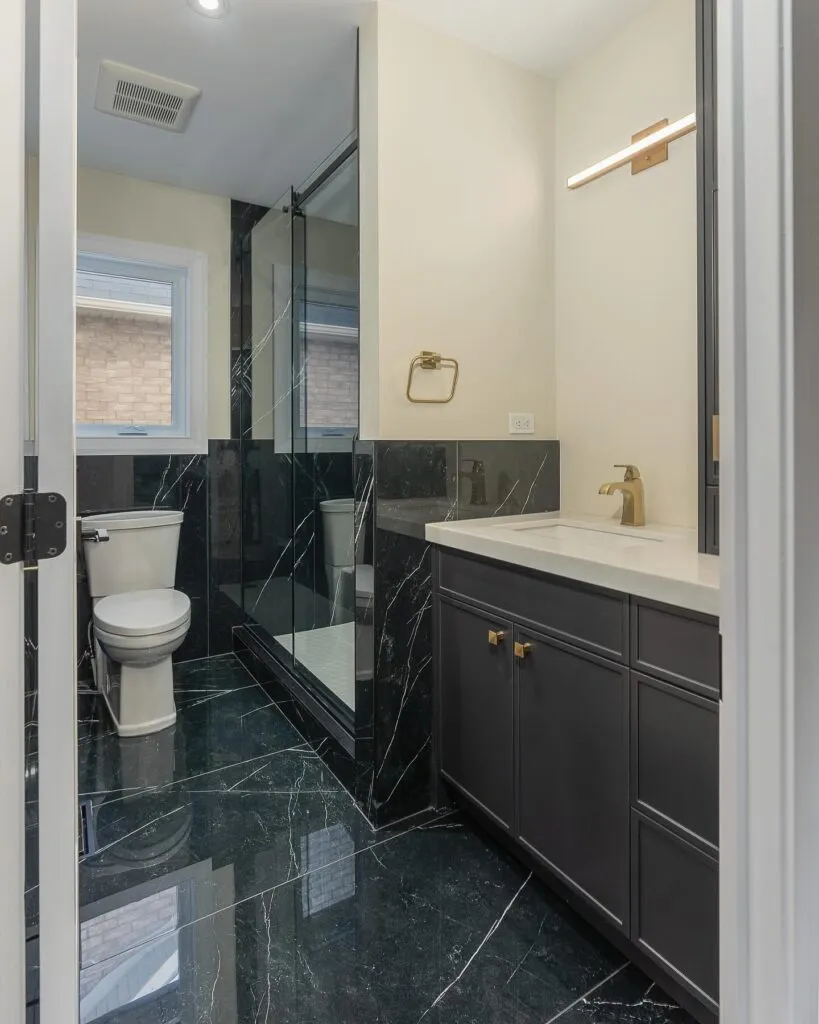
Maintenance is also important. I recommend choosing a finish that hides fingerprints and water spots. Matte or satin black is much easier to maintain than high-gloss finishes.
20. Windowless Basement Bathroom Ideas
When I design a windowless basement bathroom, the biggest challenges are lighting and ventilation. Without natural light, these bathrooms can feel tight and uncomfortable, especially with low ceilings or small layouts. I never compromise on lighting, airflow, or color choices. I also aim for layouts that feel open and simple, so the bathroom looks finished and bright even without windows.
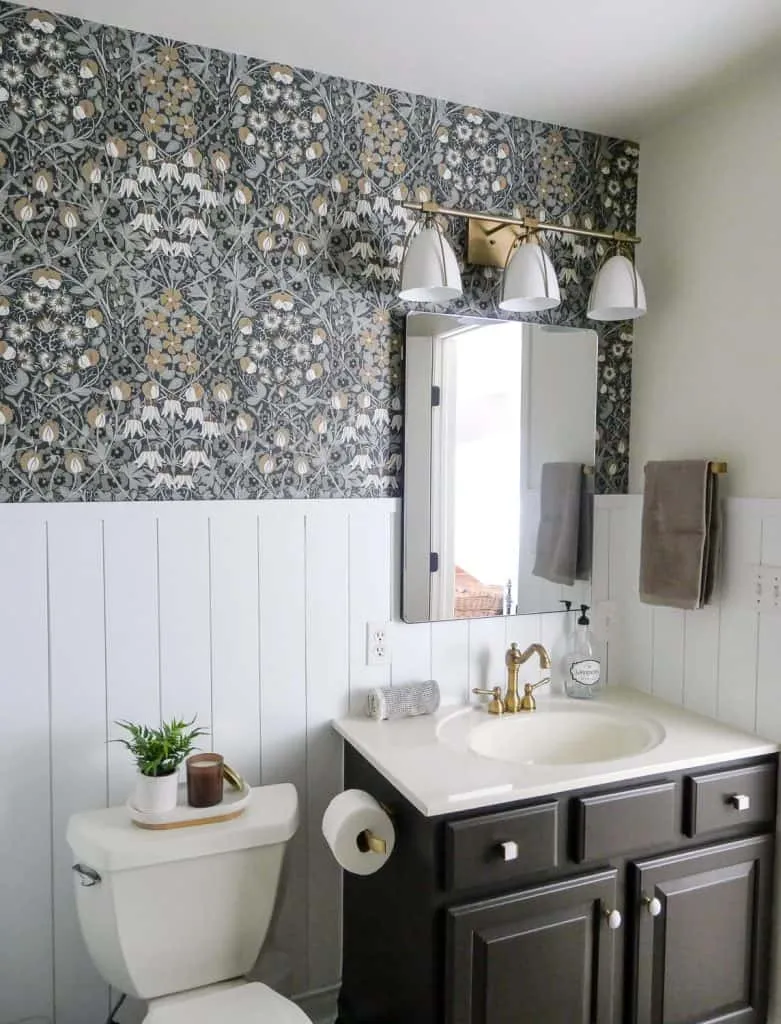
For walls and floors, I use light neutral colors and glossy or semi-gloss finishes that reflect light. I always install a strong exhaust fan with a timer or humidity sensor to keep the air fresh. Lighting is layered with recessed ceiling lights, LED mirrors, and sometimes a ceiling-mounted fixture over the tub or shower. Wall-mounted toilets and vanities help free up floor space and make the room feel larger. When possible, I add a frosted glass panel or interior window to borrow light from an adjacent room while keeping privacy.
Many homeowners worry that a windowless basement bathroom will always feel dark and closed in. In reality, the right choices can completely change that. I focus on light colors, thoughtful mirror placement, and strong layered lighting to brighten the space. I usually prefer one large mirror or two well-placed mirrors to reflect as much light as possible and make the room feel more open.
I would end this section with a reminder to keep decor simple. Heavy or dark accessories can make the space feel smaller. Light-colored rugs and clear containers help keep the room feeling open and fresh.
21. Dark and Dramatic Black Basement Bathroom Ideas
When I plan a black basement bathroom, I always think about a cozy and moody feel while keeping the space safe and easy to use. Black works very well in basements when it is paired with warm metal touches and smart lighting. In 2026, I see more homeowners open to bold and dramatic basement bathrooms, especially for guest baths, teen spaces, or basement bars that need a more mature look. The key is using dark colors in the right places so the room feels stylish, not heavy.
I usually start with dark floor tiles, charcoal shower walls, and a black vanity. To balance this, I keep the ceiling and upper walls soft off-white so the room does not feel low or closed in. I like adding texture through fluted glass shower doors, brushed metal finishes, and lightly patterned countertops. Soft LED lighting under the vanity or inside niches adds depth and makes the bathroom feel carefully designed. If the bathroom is small or on a budget, painting the walls deep charcoal with simple fixtures works well, while lighting and accessories create the mood.
The best black basement bathrooms use layers rather than a single solid dark color. I often mix matte and glossy finishes to avoid a flat look. Matte tiles with glossy accents and reflective metals help the space feel rich and interesting.
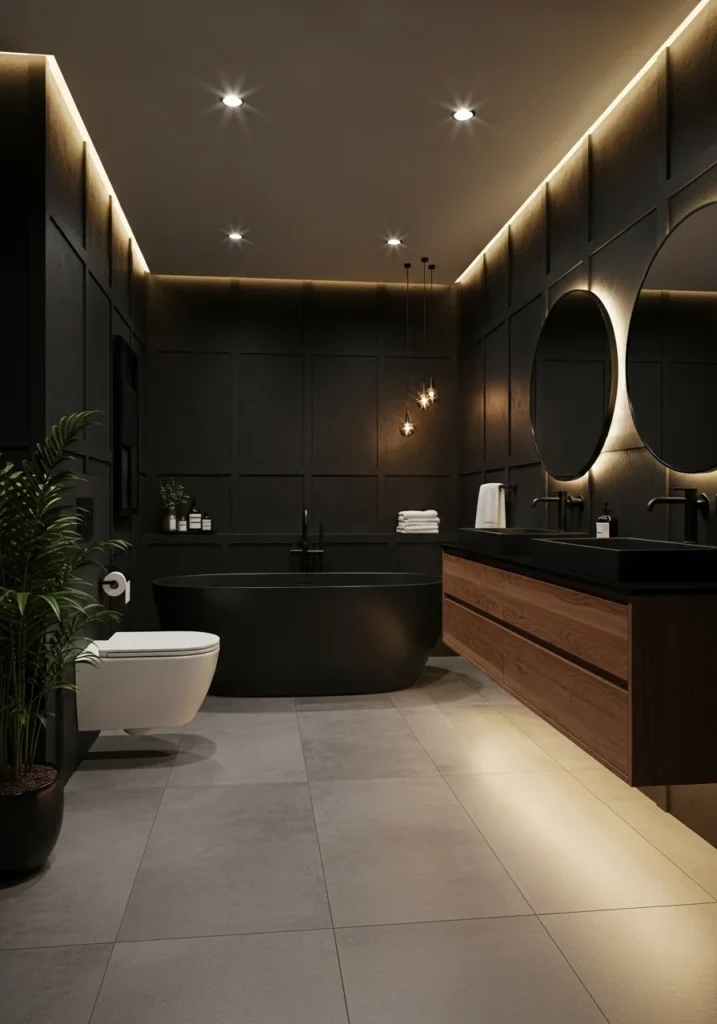
Lighting choice is very important here. I always recommend warm white bulbs in black bathrooms. This keeps the room inviting and calm instead of harsh or cold.
22. Complete and Functional Full Basement Bathroom Ideas
When I design a full basement bathroom, I treat it like a main bathroom. It includes a shower or tub, a proper vanity, storage, and a toilet, all arranged in a way that feels comfortable. The challenge is fitting everything into a limited space without making the room feel dark. I often design these bathrooms as primary baths, especially in guest suites or teen areas, so I choose durable and practical finishes. This is where ideas like basement bathrooms with tubs, showers, and even laundry areas really shine when planned properly.
For a full basement bathroom on a budget, I usually place a tub-shower combo along the longest wall. A medium-size vanity goes on the opposite or nearby wall, and the toilet is placed where it is easy to move around. I try to keep plumbing close to existing lines to control costs. If the bathroom includes laundry, I prefer stacked machines hidden behind sliding or bi-fold doors, with shelves above for towels and supplies. Light paint, pale tiles, and a large mirror help the space feel bigger, especially if the ceiling is low and there are no windows.
A well-planned full basement bathroom often becomes one of the most used rooms in the house. I always suggest investing in good fixtures and a strong exhaust fan since the bathroom may be used daily by family and guests. Secondary bathrooms should feel just as good as main ones, and that is how I approach my designs for 2026. Good storage is essential so counters stay clean and the space feels organized.

I also think about future needs. Small changes like a slightly wider doorway, reinforced walls for future grab bars, and easy-to-use handles can make the bathroom comfortable long-term without changing the look.
23. Warm and Cozy Farmhouse Basement Bathroom Ideas
When I work on farmhouse basement bathrooms, my goal is warmth, charm, and a welcoming feel that softens the cold look of concrete or block walls. Farmhouse style works very well in basements used as family rooms or guest spaces because it feels relaxed and friendly. I combine classic farmhouse details like shiplap, barn-style doors, and vintage-style lighting with modern basement needs. Even if part of the basement is unfinished, the bathroom should look bright and complete.
I usually start with a white or light wood vanity, a simple ceramic sink, and black or oil-rubbed bronze fixtures. If space allows, a sliding barn door adds both function and farmhouse character. I use shiplap or beadboard on one or two walls, not everywhere, and choose simple tile or plank-style flooring for a rustic look. If the budget allows for a tub, I prefer a classic white alcove tub with a simple curtain rod. Warm lighting and a framed wood or black metal mirror finish the space nicely.
Farmhouse style works especially well in basements because small imperfections add character. Exposed beams or short block walls can become part of the story instead of being hidden. I avoid using too many dark colors so the room stays light, especially with lower ceilings.
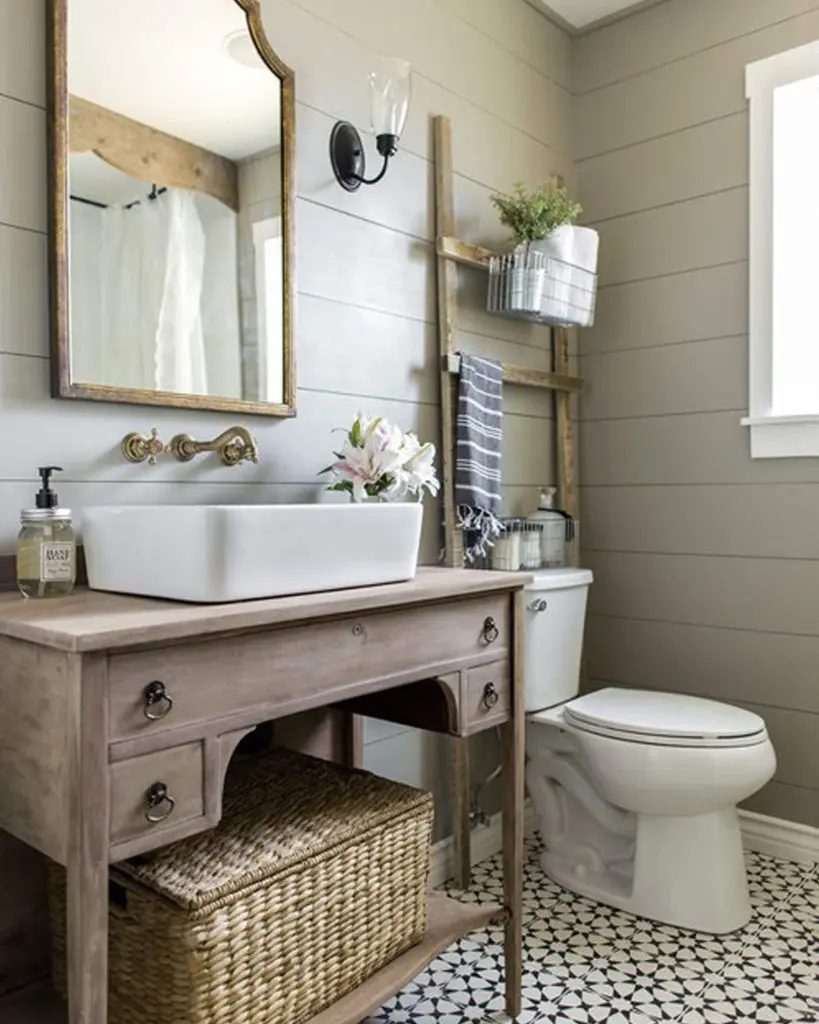
Moisture control is still very important. I often choose moisture-resistant beadboard made from MDF or PVC around wet areas and always include a good vent fan. This way, the farmhouse look lasts without warping or mold issues.
24. Clean and Updated Modern Farmhouse Basement Bathroom Ideas
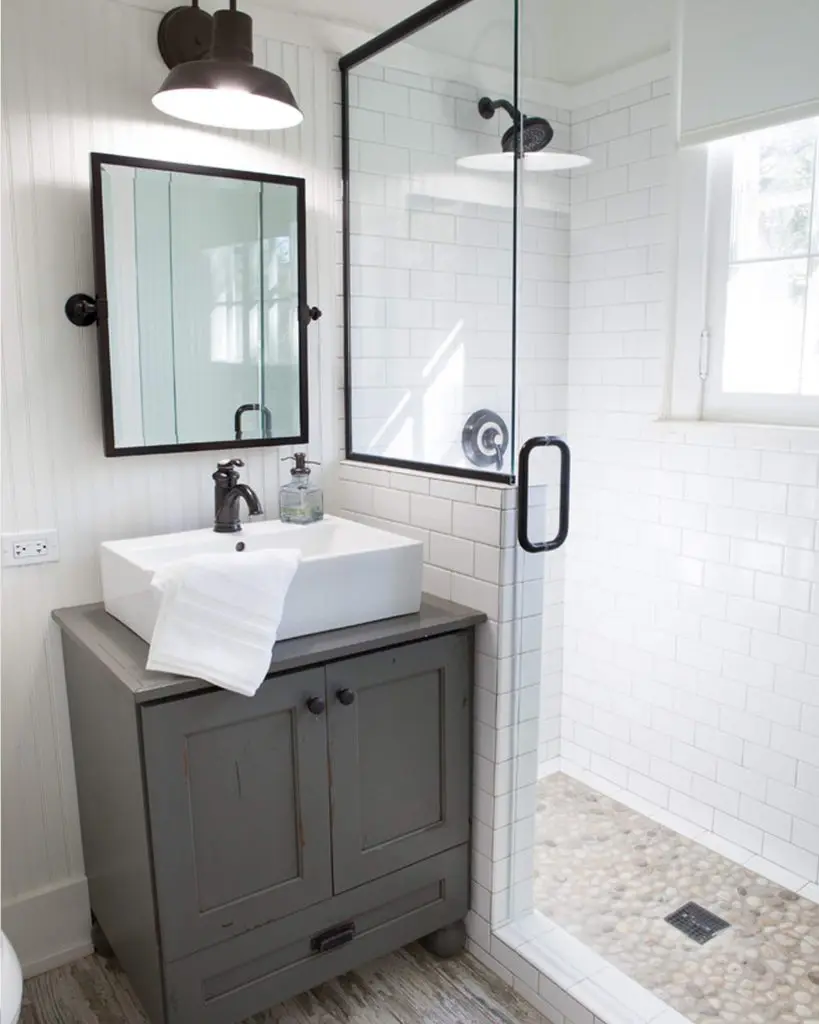
Modern farmhouse basement bathrooms are a cleaner and more updated version of the classic farmhouse style. I mix natural wood and black hardware with simple lines and soft colors. This style is very popular in 2026 because homeowners want basements to feel fresh while still matching the rest of the house. It works especially well if the main floor already has a modern farmhouse look.
I often use shaker-style vanities in white, warm wood, or deep green, paired with quartz countertops and simple rectangular mirrors in black frames. Tile choices stay simple, like subway tile in the shower and large porcelain tiles on the floor. Black fixtures and barn-style lighting bring in the farmhouse feel, while clean lines and minimal decor keep it modern. In low-ceiling basements, I avoid heavy beams and dark overhead colors, focusing on texture at eye level instead.
I use this style in moody basement bathrooms when I want depth without making the space feel too dark. The contrast of black hardware, white walls, and natural wood keeps the room balanced while still adding character. It creates a timeless look that feels easy to live with and works well over the long term.
I always suggest adding one unexpected detail, such as patterned floor tile, bold artwork, or a modern wall light. This small twist gives the bathroom personality without raising costs.
25. Smart and Stylish Cinder Block Basement Bathroom Ideas
When I design bathrooms with cinder block walls, I see both a challenge and an opportunity. Many older basements have exposed block, which can feel cold and unfinished. With the right approach, it can become a strong design feature. In 2026, more homeowners are choosing to highlight original structures instead of hiding them, especially in basements.
If the block walls are in good shape, I clean, seal, and paint them in a light, warm color to reflect light. Sometimes I frame and insulate only the exterior walls and leave one interior block wall exposed behind the vanity or toilet. For an industrial look, I pair painted block walls with a modern vanity, glass shower, and durable tile flooring. Black lighting and simple fixtures add an edge, while wood shelves and soft towels keep the space comfortable.
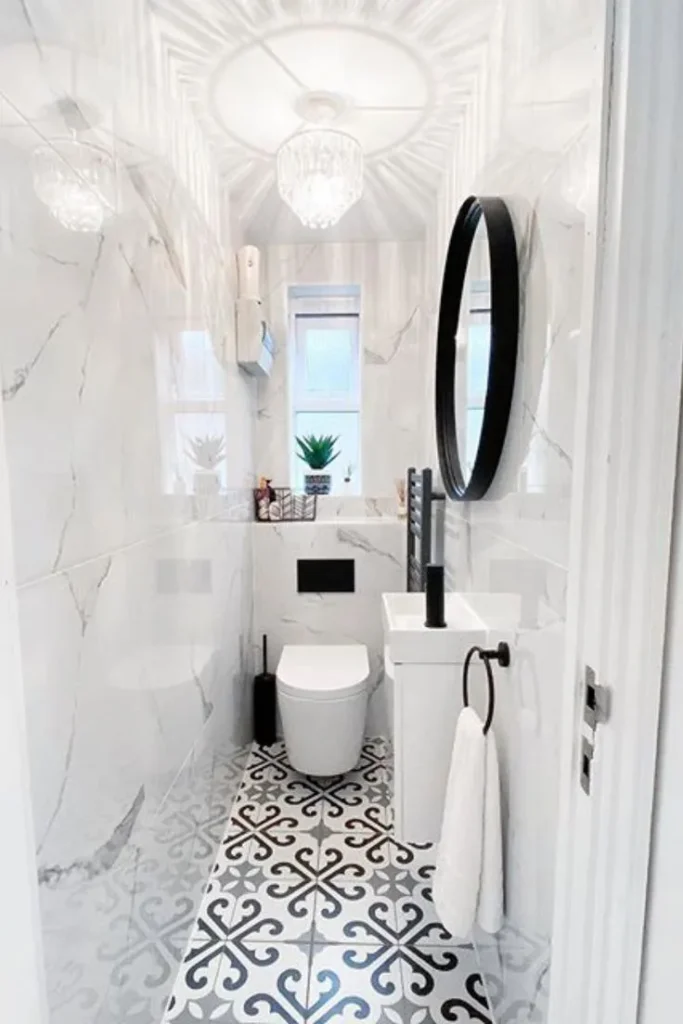
If the block walls are uneven or damp, I build proper stud walls with insulation and vapor barriers before finishing them. Even then, I still respect the block layout since it often affects plumbing and niche placement. Industrial-style bathrooms are often featured in design magazines, and basements are a natural place for this look.
Before any design work, waterproofing is essential. I always address drainage and moisture issues first. Once the space is dry, both painted block and framed walls become long-lasting and budget-friendly solutions.
26. Practical and Affordable Basement Bathroom Ideas on a Budget
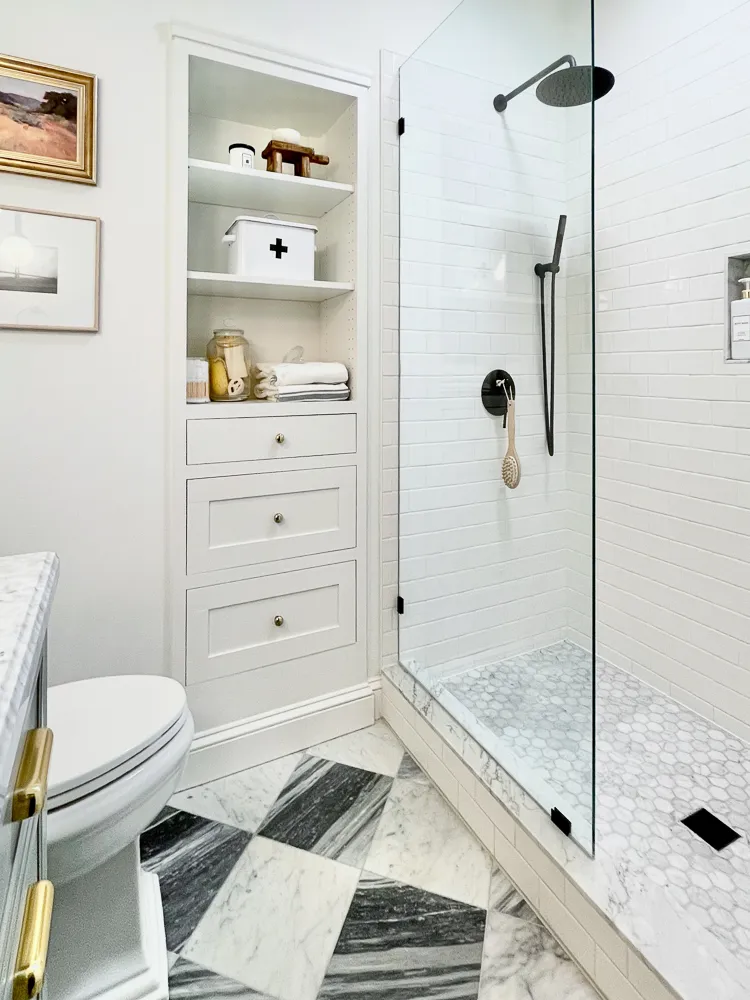
When designing basement bathrooms on a budget, I focus on function first and choose one or two features that make the biggest visual impact. Many homeowners want affordable basement bathrooms that still look modern and finished, and that is very doable with smart choices. I always try to keep existing plumbing in place because moving pipes can quickly raise costs.
To save money, I use ready-made tub-shower units, basic white toilets, and standard vanities. Waterproof laminate flooring is a great low-cost option that still looks good. For walls, I choose soft neutral colors and sometimes add one accent wall using budget-friendly wallpaper or paint. Open shelves are another great way to save money while adding storage. Good lighting and a large mirror can instantly update even the simplest bathroom.
The biggest savings come from knowing where not to spend. I usually avoid custom cabinets or expensive stone counters on tight budgets. Many remodelers agree that clean tile work, matching finishes, and good lighting matter more than brand names. A well-planned budget bathroom often feels better than an expensive but poorly designed one.
My priority list is simple. First, waterproofing and ventilation. Second, lighting. Third, easy-to-clean surfaces. Decor can always be updated later, but structure and air quality must come first.
27. Smart Layout Small and Cheap Basement Bathroom Ideas
Small and low-cost basement bathrooms need careful planning. Space is limited, ceilings are low, and budgets are tight, so layout matters most. I always check door swings, toilet clearance, and sink placement to avoid awkward movement. Instead of trying to fit everything, I decide early whether the focus is a shower, a tub, or a nearby laundry area.
I rely on compact fixtures like corner sinks, wall-mounted vanities, round-front toilets, and corner showers. Wall-mounted faucets and slim shelves save space around the sink. I use light finishes such as white or pale tiles with small repeating patterns to keep the room open. Even a small accent tile strip or wallpaper section adds interest without extra cost. Hooks work better than towel bars, and shower niches replace bulky shelves.
Small bathrooms should never feel like leftover spaces. I take inspiration from hotel and apartment bathrooms that make the most of every inch. Tall mirrors and vertical storage help rooms feel larger. A simple and clean layout always feels more comfortable than a crowded one.

I also think about future repairs. I choose easy-to-find tiles and fixtures so replacements are simple later. In a small basement bathroom, repairs can feel disruptive, so keeping things simple from the start is best.
28. Basement Bathroom Trends Comparing 2025 and 2026
Basement bathroom trends have clearly shifted from 2025 to 2026. In 2025, basement bathrooms were often treated as basic spaces with white fixtures and little design. By 2026, homeowners care much more about style, even in low-ceiling or windowless basements. The focus has moved toward mood, color, and materials so basements feel like part of the home, not an afterthought.
In 2025, bright white bathrooms were common to fight dark basement spaces. Now, I see more moody designs with black accents, green tiles, and stronger contrast balanced by better lighting. Full basement bathrooms with tubs and combined laundry areas are also more popular, showing the need for multi-use spaces. Features like fluted vanities, black hardware, and bold lighting are now common even in budget projects.
The biggest change is the demand for comfort and design balance. Homeowners want basement bathrooms to match the style of upstairs spaces, whether farmhouse, modern farmhouse, or urban. Basements are now seen as valuable living areas, not just extra rooms. I design basement bathrooms assuming they will be used daily, which affects storage, ventilation, and finish choices.
I also pay attention to sound control. Solid-core doors and insulation around laundry areas help reduce noise. Sliding doors or partial walls can hide laundry machines, allowing the bathroom to feel calm and spa-like when the machines are not running.