Planning the Ultimate Sensory Experience with Your Mud Kitchen Setup
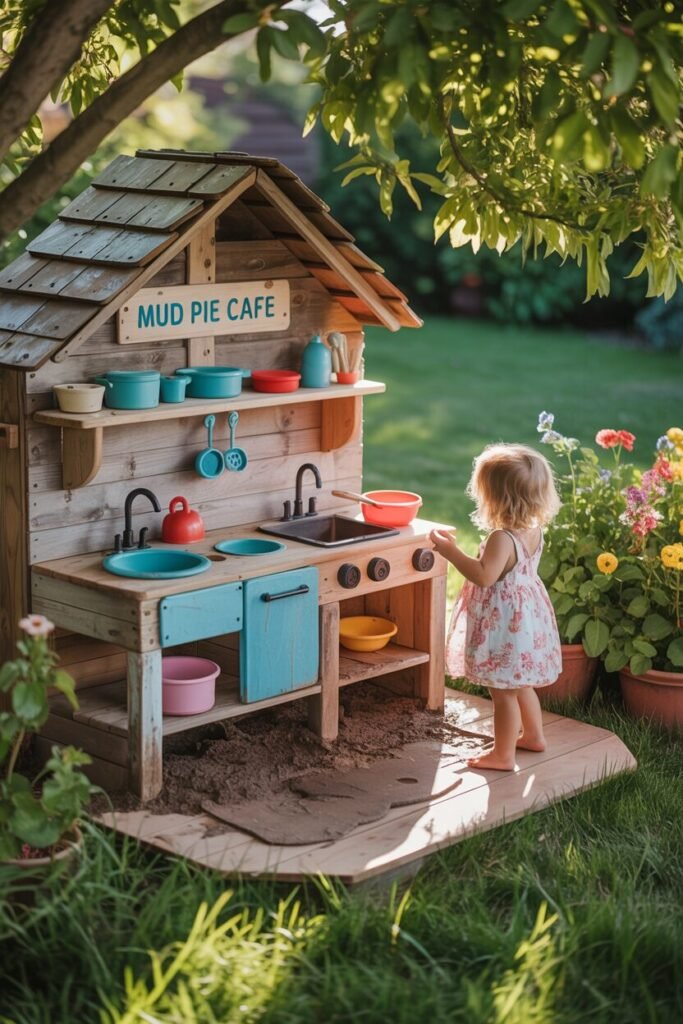
A mud kitchen? Nope, not even close. Think of it as a cool extension of your beautifully designed home, a little backyard wonder that says, “Yeah, we’ve got style, even in our dirt.” Pfft, it’s consequently much more than some gross little mess-maker where kids receive totally caked in dirt.
Another thing: when this tiny treasure matches your home’s look be it Boho, Scandi, Rustic, or Modern Farmhouse it feels less like an afterthought and more like a “we totally meant to do that” moment. It’s about creating a harmonious vibe that’s awesome for your little ones’ senses, too. It’s not just about cuteness (though, let’s be real, that’s a large part of it).
When the feel, colors, and overall rhythm are all in sync, your mud kitchen doesn’t look like it just crash-landed in your yard; it looks like it’s always belonged. Textures, shapes, and colors that connect with your home’s rhythm are like a perfectly choreographed routine. No awkward elbows here! It makes the whole space feel right.
Rustic Nature-Inspired Charm
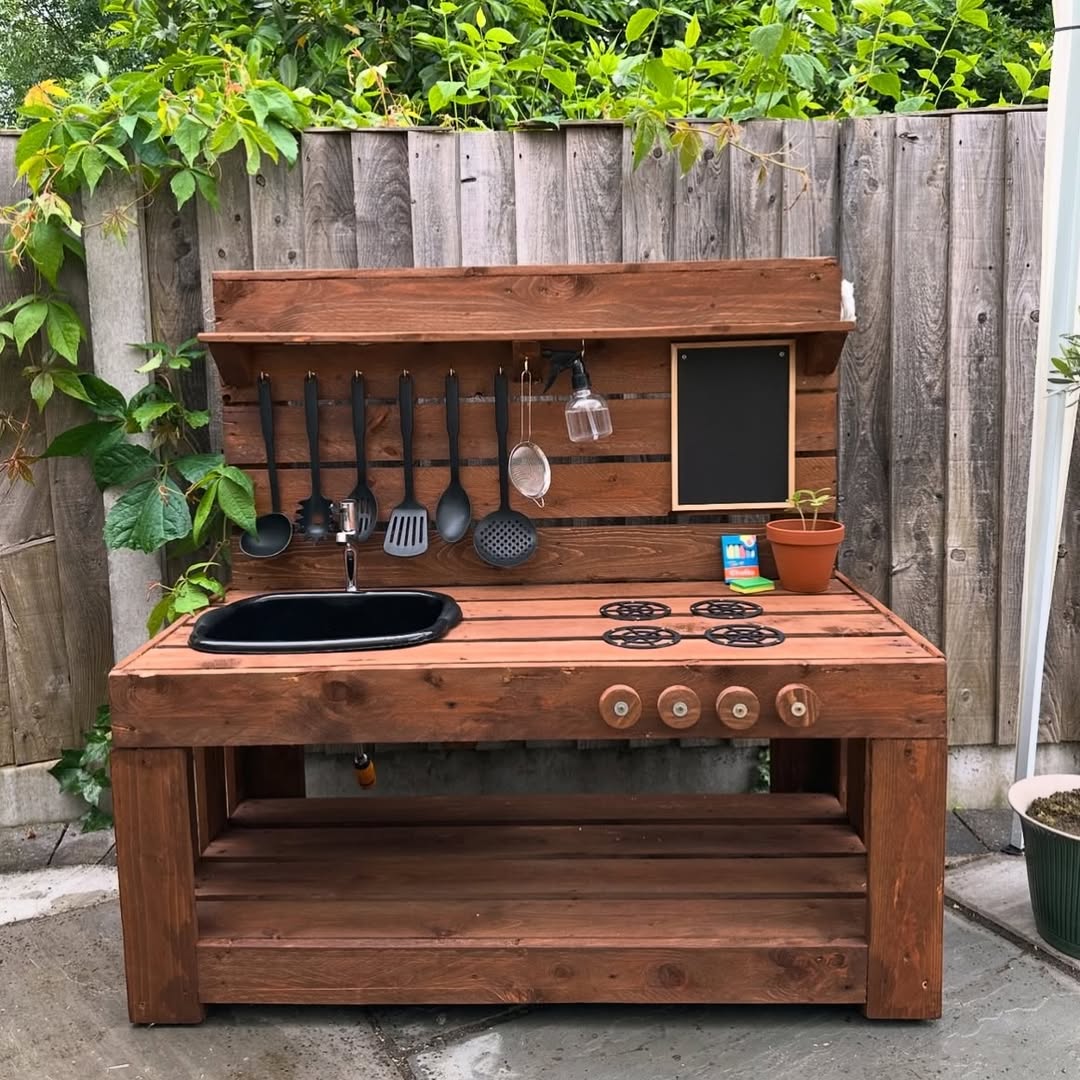
Plus, wouldn’t you just love a rustic mud kitchen in your yard? However, that’s not it. It’s about being in tune with nature, folks! This isn’t about looking like you just got back from a hike; it’s about embracing the wild, untamed joy of a forest and all those cool sticks and stones. You might picture it as just slapping some rough wood together on a Sunday afternoon.
It’s about giving kids a sense of integrity because who needs a fancy playset when you can just play with nature itself? Let nature be your blueprint, and you just follow its lead with your materials, textures, and setup, making it look like it just sprouted from the earth. The trick?
From thick, raw pieces of wood to chunky parts that whisper of moss in quiet tones, to colors borrowed straight from the forest floor, everything should feel like it’s been there forever. The next three ideas are our little secret sauce to making your outdoor space feel amazing while still being perfect for a mud-pie-baking disaster.
Let Local Materials and Tree Canopy Define the Setting
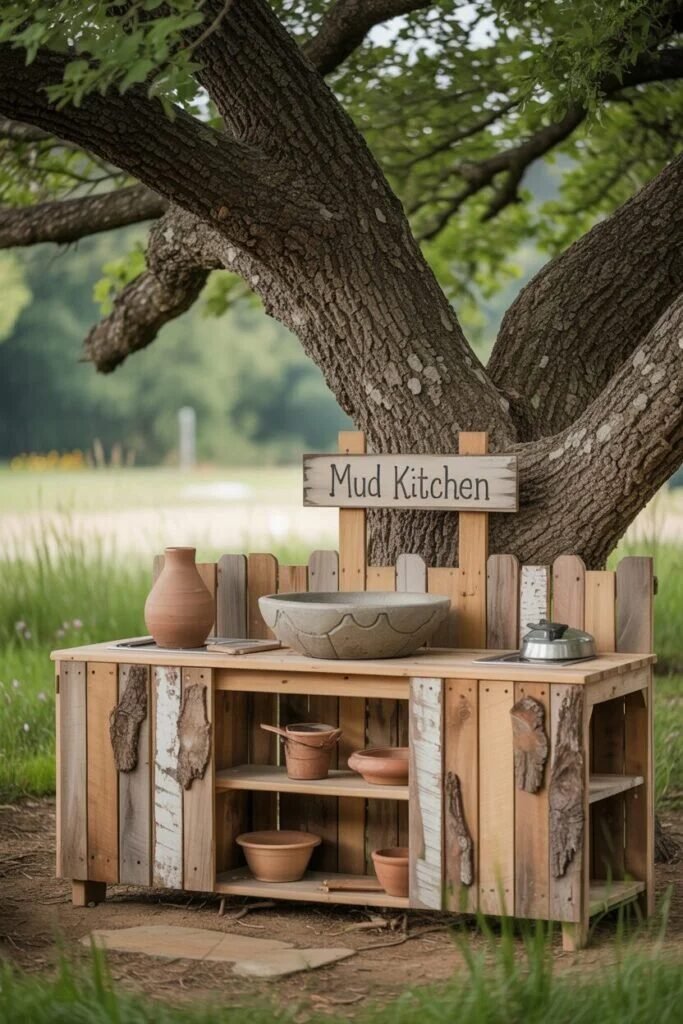
If you’re serious about getting that forest-floor glow, park that kitchen under a tree! For the build itself, we’re talking untreated, reclaimed wood with all its knots and grains showing. Go for an oak, maple, or some other tree with a huge canopy that will let dappled light filter through like a forest disco ball.
It’ll blend in well; you’ll think a tree just decided to become a kitchen. Totally! Weave them into the paneling or just scatter them as accents to scream “wild and tactile!” Bark textures?
A stone basin or vintage clay sink? This isn’t about trying to copy a nature photo; it’s about giving kids a chance to get seriously dirty (pun intended) with the textures, smells, and pure fun of the real, ever-changing outdoors. That’s fantastic, old-fashioned, earthy kid stuff hearty, solid, and looks like it’s been around since the dinosaurs.
Use Earth-Toned Layers to Stimulate Without Overwhelming
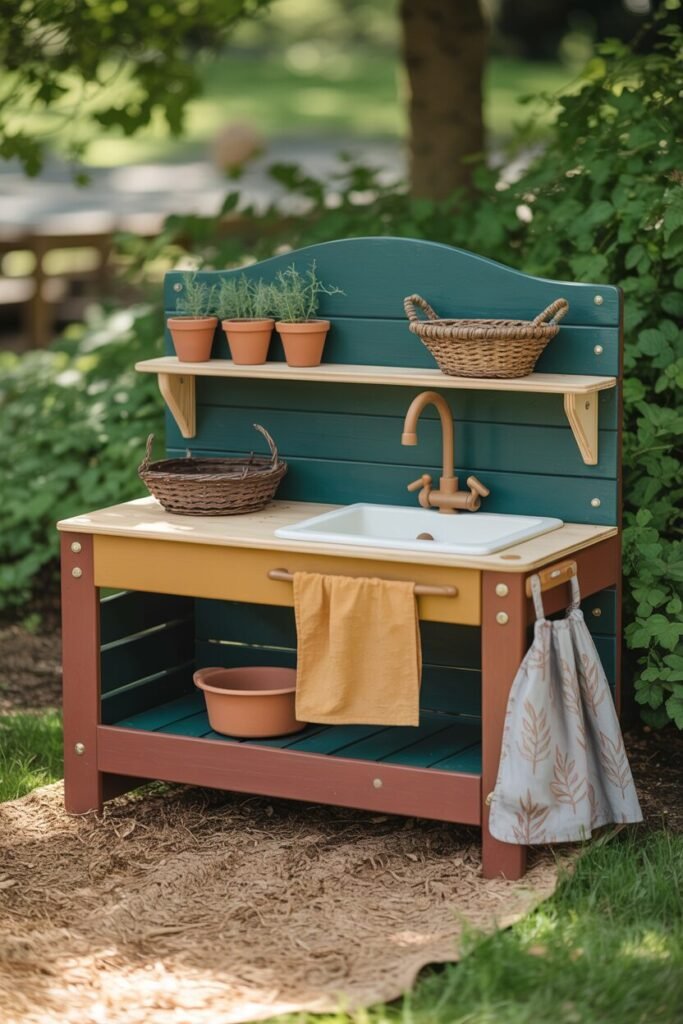
Another thing: in rustic design, colors come from soil, bark, lichen, and leaves. Line shallow trays with real or fake moss to soften things and make them feel like a woodland floor. Pick a palette of forest green, ochre, and deep brown for things like kid aprons, wooden scoops, or herb drying racks.
Demonstrate collections of pinecones, acorns, or seed pods in low baskets for both loose parts and cool decor. Unlike super-bright plastic toys, this approach creates a complex look while keeping things calm, helping kids feel a real, sensory connection to their outdoor world.
Weave Ecological Functionality Into Every Part
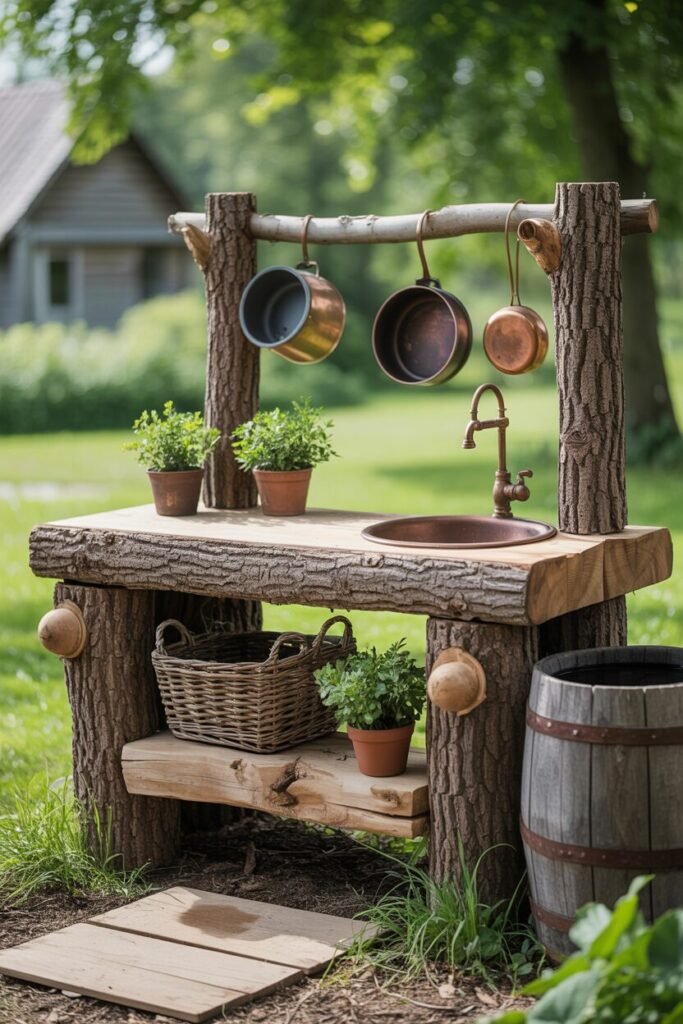
Plus, pure rustic appeal? consequently, we recommend this mud kitchen to be part of them! Another thing: employ leveled-off logs for the countertop they create a wonderfully rough yet perfectly usable surface. A stick hanger for sticks you’ve collected (why hit Home Depot when you have the woods?) or from little twigs on a string? Genius for storing and for large storytelling sessions. It’s a love letter to nature’s rhythms.
Plus, on the ground, roll up grass mats or utilize bark mulch to cushion the floor, and, let’s be honest, cut down on face-plants. It’s not just about playing; it’s about making green thinking just part of what we do. This earthy, circular setup shows that sustainability isn’t some boring theory; it’s a living, breathing part of the playground culture. Pretty cool, right? And for the ultimate green touch, add a massive rain barrel to collect water naturally.
Boho Chic Freedom
Bohemian chic, darling? Absolutely not. It’s a thoughtful mix of simple structure, rich textures, handcrafted details, and a real connection to the earth. And in a mud kitchen, Boho Chic is all about letting kids play freely without losing an ounce of meaning. Not some messy pile of tie-dye and dreamcatchers.
It’s where personality can go wild, using spontaneous shapes and a sensory softness. To really nail this, our design choices are a huge welcome mat for movement, storytelling, and sensory discovery, all with that laid-back design mojo that matches the rest of your backyard escape. Because, seriously, who wants bland when you can have a full-on sensory party?
The secret? Here are three super earthy tips that create a successful, inspiring Boho-style mud kitchen. acquire ready for some serious playfulness! On top of that, mixing visual surprises with a touch of structure consequently it feels natural, not like a weird yard sale explosion.
Build Visual Layers Through Mixed, Tactile Surfaces
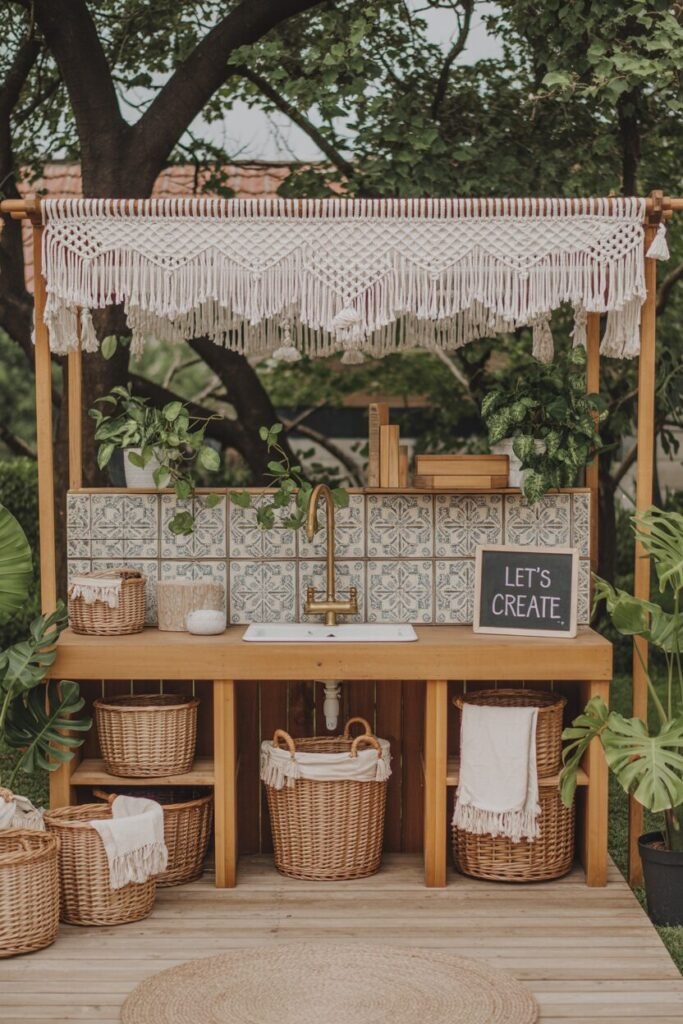
A boho-meditative mud kitchen relies on a visual rhythm that comes from mixing and matching textures and finishes. simple to wipe clean, however with major style! What’s more, for the sink base, maybe some carved mango wood or teak? It gives you that cozy, handcrafted look that says, “we’re adults, even with mud on our noses.” How about a hand-painted cement or Moroccan tile top for the counter or backsplash?
What’s more, and for a little extra magic, add a fringe canopy to soften the light and break up those harsh straight lines. Raw baskets of cotton, rattan, and jute offer a cool shade for spoons or mud paste and act as both storage and texture. We’re not looking for perfect symmetry here, nevertheless a harmony of opposites. Each material has its own unique sensory voice, all coming together in one massive natural whole. Because why be the same when you can be thus perfectly you? Another thing: mmm, yeah.
Encourage Flow and Movement in the Details
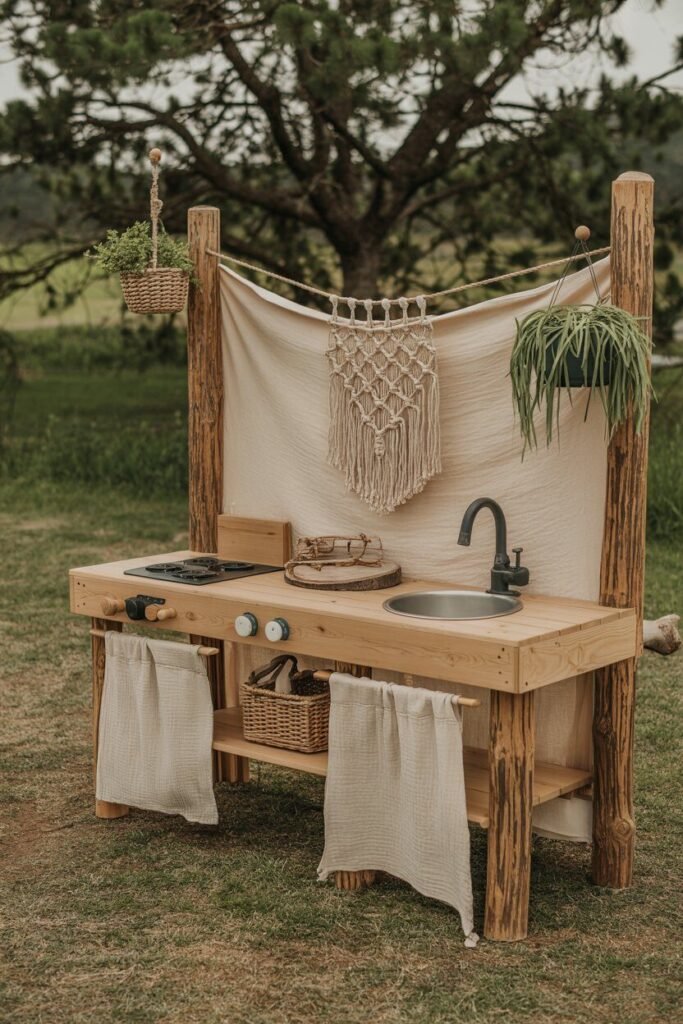
Boho is all about movement and draping think wind-tousled curtains, rope hangings, and that lovely off-center feel that brings energy to the space. Macramé plant hangers or wall hangings? On top of that, oh, yes! They add height and a touch of vertical fun. thus, we drape the legs or pillars with flowing cloth (muslin, batik, or a light sari!) to add softness and guide the eye around the kitchen.
On top of that, add driftwood as handles or spoons? They’re not just a tiny detail; they shake up the flow in the best way, making the space feel lived-in, natural, and super expressive. What’s more, for kids, it’s an open-ended play zone that’s as flexible and fun as their imagination. It’s a lovely mix of human creativity and nature.
Extend the Play Zone with Soft, Grounded Perimeters
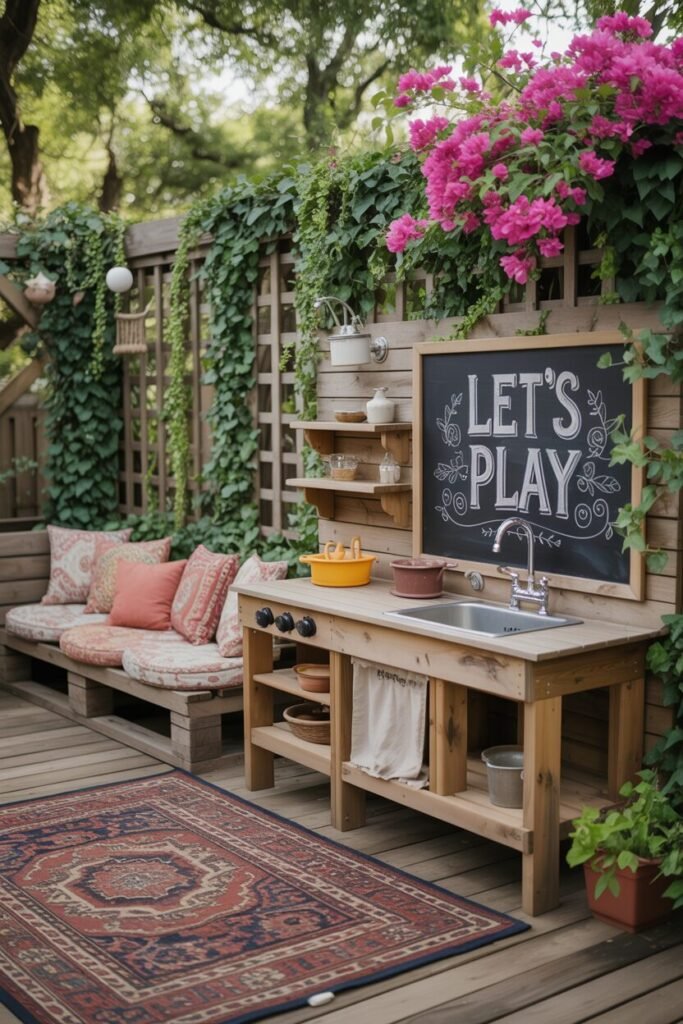
The bohemian mud kitchen never stays stuck in its own space; it spills out in a glorious, loose way. It’ll stop slips (because falling with flair is still slipping) and welcome all kinds of stunning floor-play. consequently, we suggest an outdoor-friendly Persian or tribal-print rug to create a soft border around the kitchen.
Throw in a couple of scatter pillows or poufs for straightforward lounging or for relaxing between those marathon mud-pie-baking sessions. It creates a soft edge without any harsh “stay out!” lines. These “edges” turn the kitchen into a cozy sanctuary instead of a standalone piece. Behind or to the side, tie some flowering vines or herbs onto a wooden trellis.
It’s not it’s being play like bloom about making sensory happy can stories relaxed all and fancy; where little a space about weeds.
Modern Farmhouse Warmth
Sitting on a pedestal of simplicity and that classic, timeless look, modern farmhouse style just radiates cozy vibes with its touchable textures and earth tones. It’s about a clean look that’s additionally inviting. Because what’s the point of fun if you can’t be cute while doing it? A mud kitchen built this way has to look like it belongs right in your yard, matching its rhythm perfectly.
Another thing: to acquire this serene loveliness, you can’t just throw together some old, weathered crates or shiplap boards. The magic is in using smart design principles that perfectly mix rough materials with a totally intentional, practical purpose. These three must-have design ideas turn a farmhouse-themed mud kitchen from a passing trend into a gorgeous, timeless vision. acquire ready for something truly gorgeous! Nope, it’s not that straightforward!
Highlight Structural Honesty with Reclaimed and Visible Materials
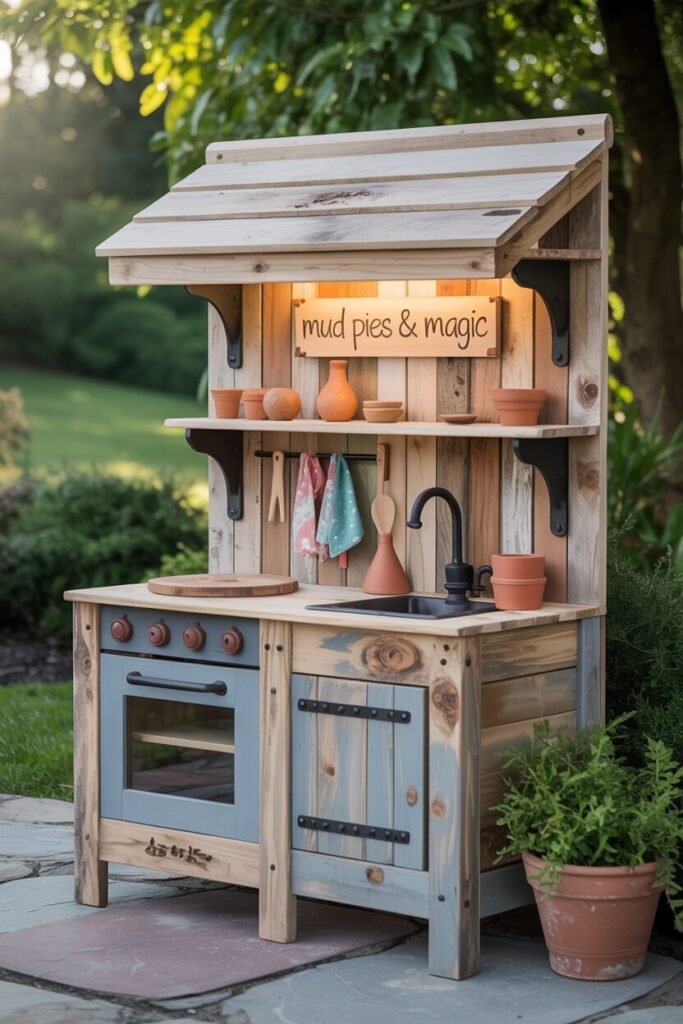
With farmhouse design, being honest about the materials is a given. And matte black metal brackets that display? A subtle nod to classic farmhouse hardware. thus on-trend, thus useful. Making the frame and counter from salvaged wood practically screams “history” and “texture.” Shaker-style shelves to match your indoor cabinets because no one loves change, even with mud pies.
These aren’t just for looks; they additionally provide a modular, open feel, which, let’s be honest, is what kids’ play is all about. Learning by touch, and they won’t even notice! What’s more, consequently sneaky. The open design even shows kids how supports and joints work, subtly teaching them about space and their own motor skills.
Layer Soft Finishes to Balance Function and Warmth
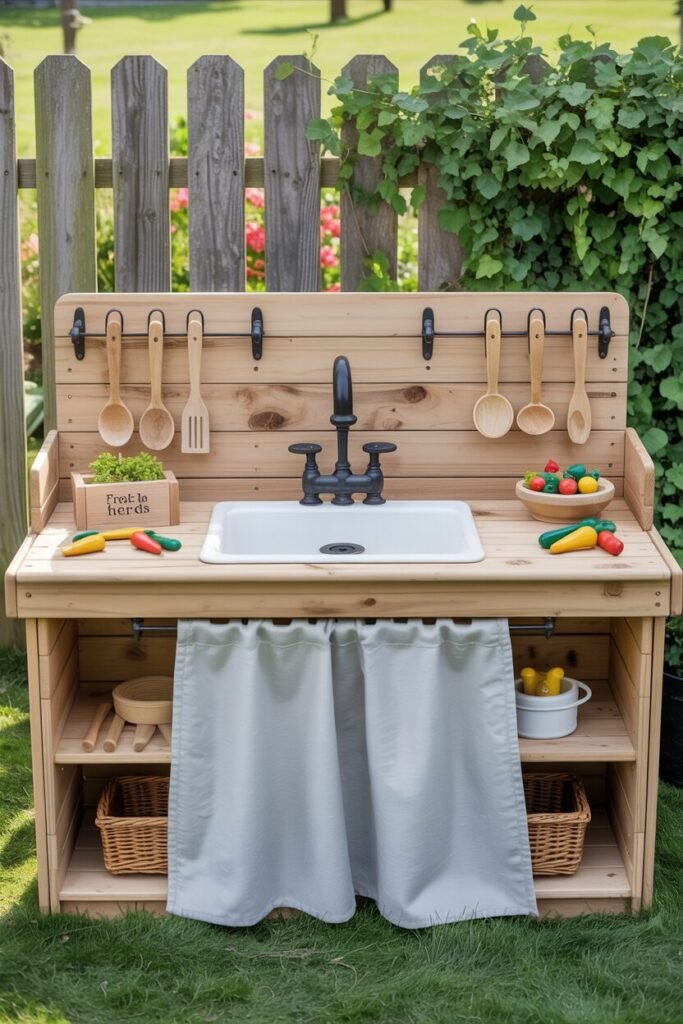
A truly successful farmhouse mud kitchen knows how to soften its difficult-working core with subtle material contrasts. It just feels right. Adding a ceramic sink (or a plastic one that looks like ceramic, because we’re not snobs) feels familiar and looks clean.
Behind the sink, an apron-front curtain of white or beige linen or cotton not only hides storage beautifully yet plus gives a sweet nod to home tradition. And wall brackets maybe cast-iron or nicely beat-up brass are perfect for holding sturdy, kid-proof tools, giving them a sense of pride and ownership over their “workspace.”
That with safe are of the intention, care mud and vibe play mix where has a sweet function messes a for and cozy, rough creates met kitchen, loving wonderful super thoughtful welcoming space.
Anchor the Kitchen in Place with Purposeful Backyard Integration
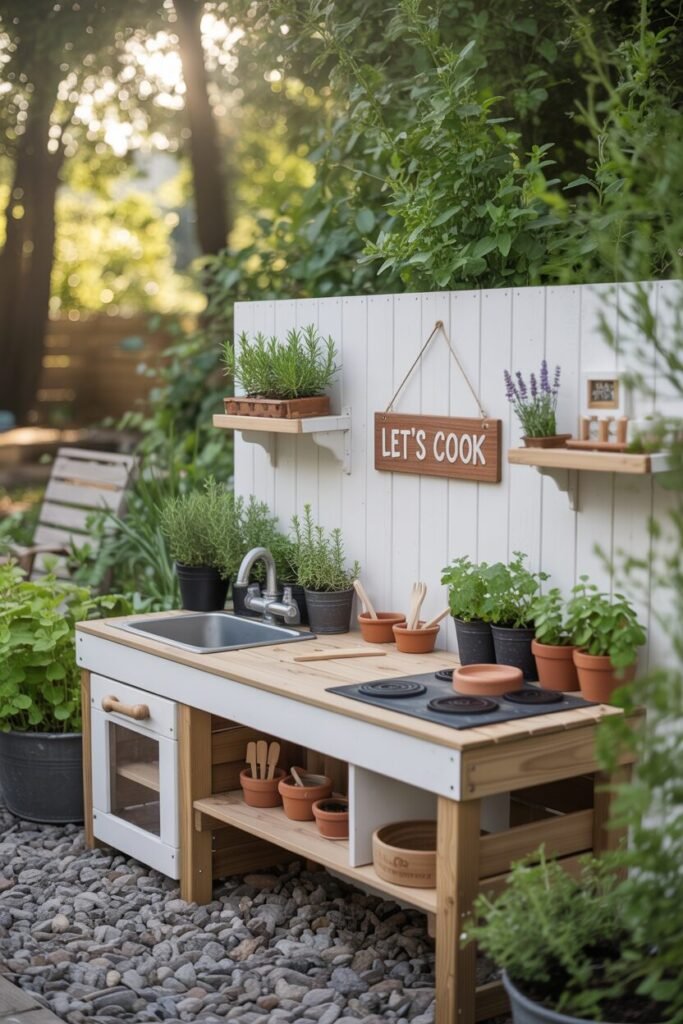
New-style farmhouses fit naturally into their surroundings. That, my friends, ruins the illusion. Instead, we root it with a crushed gravel base for drainage and shape an inexpensive trick that perfectly mimics those dreamy farmhouse garden paths. therefore practical, therefore charming. A floating mud kitchen in the middle of the lawn?
Behind the scenes, add a whitewashed vertical plank wall as an anchor and backdrop, a little wink at indoor shiplap without being a copy. These choices don’t just act as a backdrop; they truly produce the kitchen a built-in, natural part of your backyard retreat. And line the kitchen with edible herbs in terracotta pots, connecting sensory play with a cool “farm-to-table” feel.
Minimalist & Scandinavian Calm
The minimalist and Scandinavian way of doing outdoor play isn’t about taking all the fun out of it. It’s about making things clear, useful, and beautifully peaceful. Instead of limiting creativity, a pared-down setup actually helps kids focus and be more intentional letting them explore without feeling overwhelmed. Oh no, quite the opposite!
Because sometimes, less really is more, especially when you’re elbow-deep in mud. Another thing: here, the mud kitchen is a play station, however it’s furthermore a secret design move that tastefully extends the simple, clean look of your home.
The design rules are simple: clean lines (no ugly clutter, thank you!), a neutral color palette (we’re talking elegant understatement here), and a smart leverage of space without sacrificing those tiny sensory needs. This is how we give you a calm, meaningful setup that’s still full of play value, but won’t give you a headache.
Prioritize Function with Clean Architectural Lines
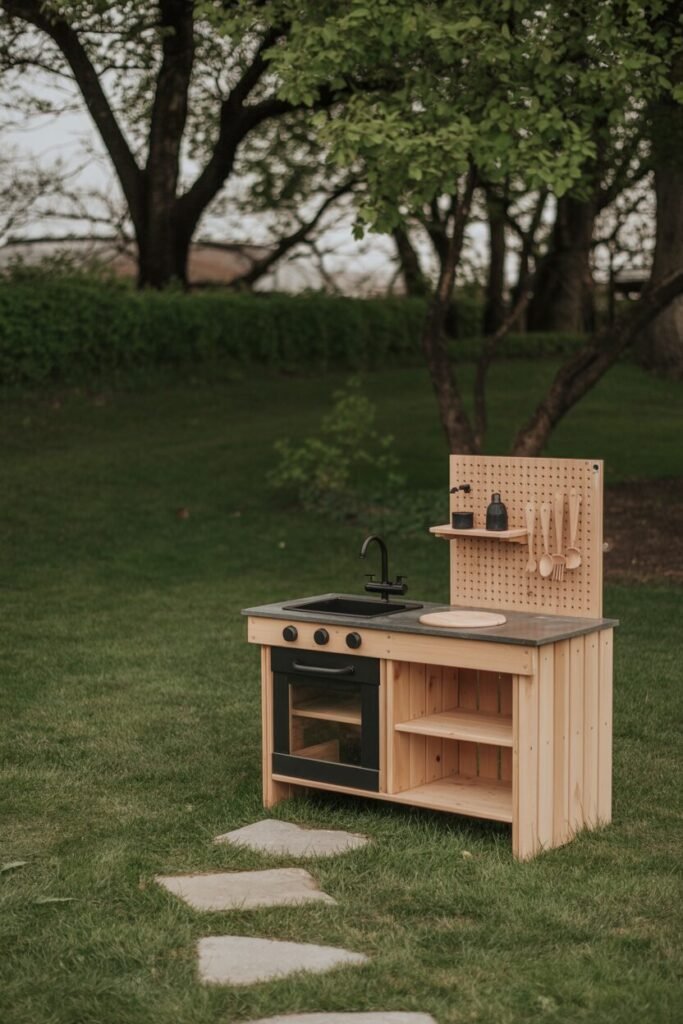
Scandinavian chic? We begin with a mud kitchen made of light woods birch, ash, or pine set off by a cool slate or soapstone countertop for awesome contrast and, let’s be honest, effortless cleaning. And throw in some matte black or brushed steel taps to add some depth without messing up the calm, neutral flow. Even water has to be cool. It’s a masterclass in making function look lovely.
Wall-mounted (or even without wall) geometric pegboards add a great, organized way to store spoons in a neat vertical line. Everything has to earn its spot being both useful and stunning thus kids have a sense of order that actually unlocks their imagination. Minimalism can be, therefore empowering, who would have thought? The massive secret here is to ditch visual noise and have fun with structure and repetition to create a rhythm.
Add Texture Without Color Using Natural and Neutral Materials
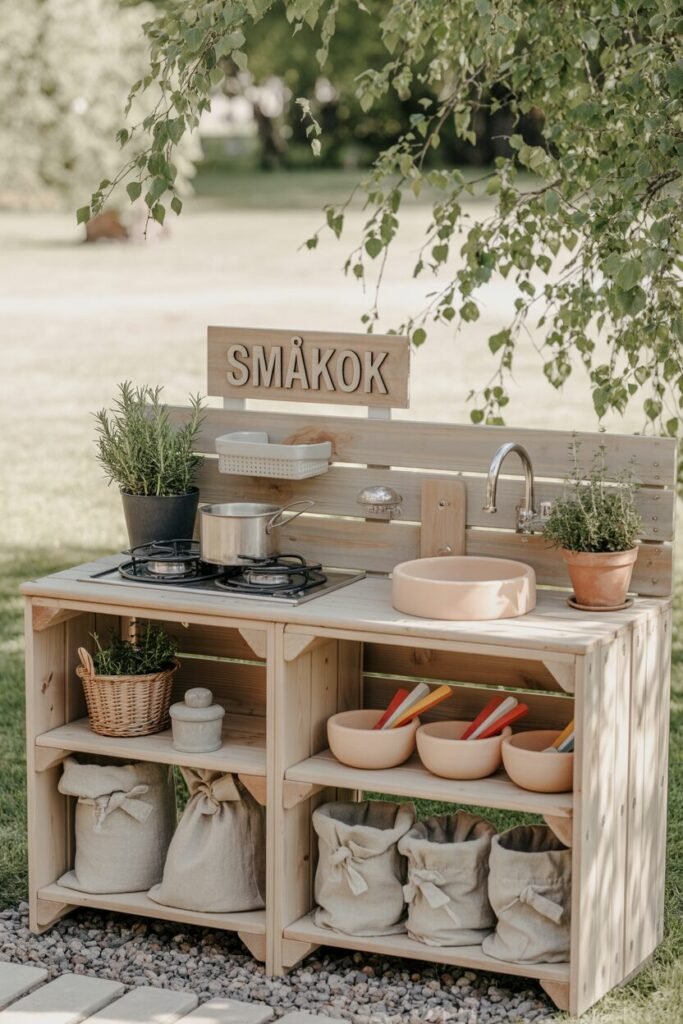
To bring it to life without being boring (boring is sterile), we layer neutrals with rich, organic textures. Light ceramic bowls or wooden scoops add a quiet touch, steering clear of any plastic that would just scream at your eyes. Because what’s the point of loud color when you have amazing texture? A ground floor of pea stone or gravel creates a kitchen “rug” that’s soft and tactile.
Natural linen bags or hanging sacks are both soft to the touch and super handy for storage, adding a nice contrast to the challenging surfaces. The space is precise, nevertheless generous, inviting lots of employ without overwhelming a child’s delicate sensory system. It’s a visual spa day for the brain. Here, texture is the real language of design quietly taking over from color as the source of stimulation.
Reduce Visual Clutter by Hiding and Integrating Storage
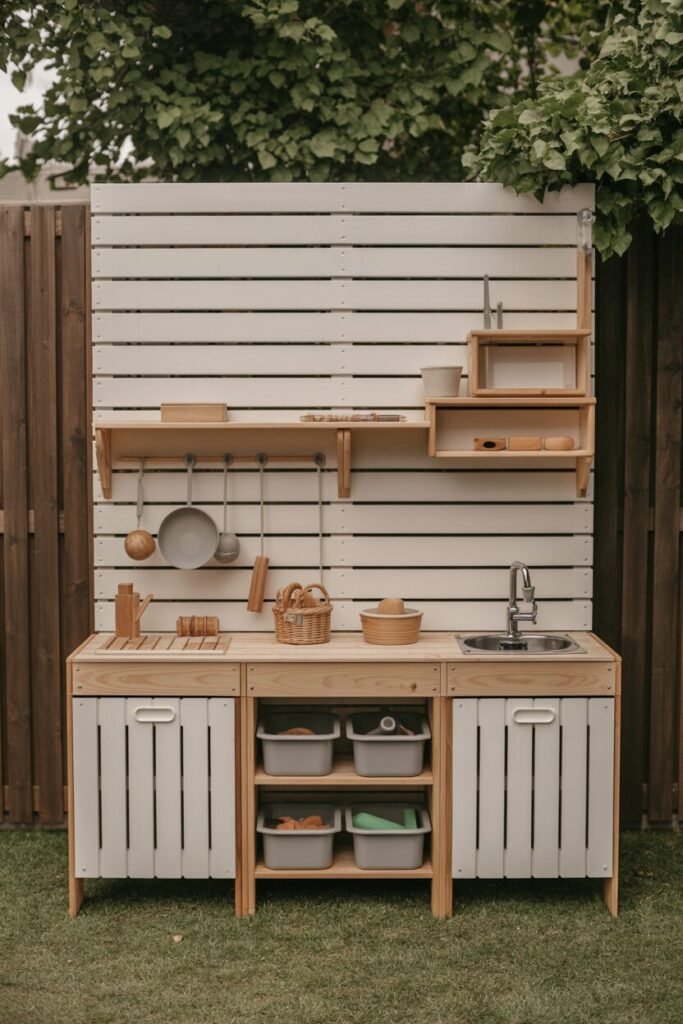
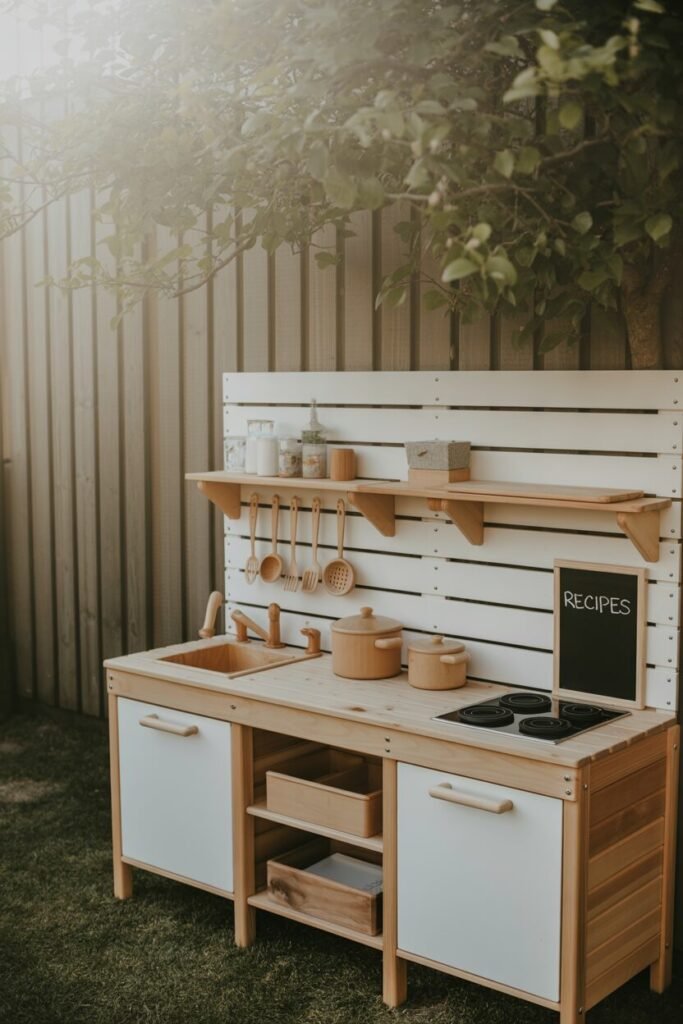
A key part of minimalist style is restraint, knowing when to hide things and when to display them off. And slatted cupboards or soft-close drawers under the counter store tools and loose parts away when they’re not needed, therefore the kitchen’s impossibly neat look stays perfect. Clutter? Never heard of her. Plus, consequently, we add a slim, built-in bench for playing or secretly watching, a design trick hidden in plain sight.
A white-painted slat wall mounted vertically above the kitchen adds a calming rhythm and vertical line without any tension. It’s both an optical illusion and a playground for the mind. Hide the mess nevertheless, have plenty of clean tools ready to spark imagination, and the space becomes a peaceful haven for focused, uninterrupted play.
Design Principles to Boost Both Looks and Sensory Fun
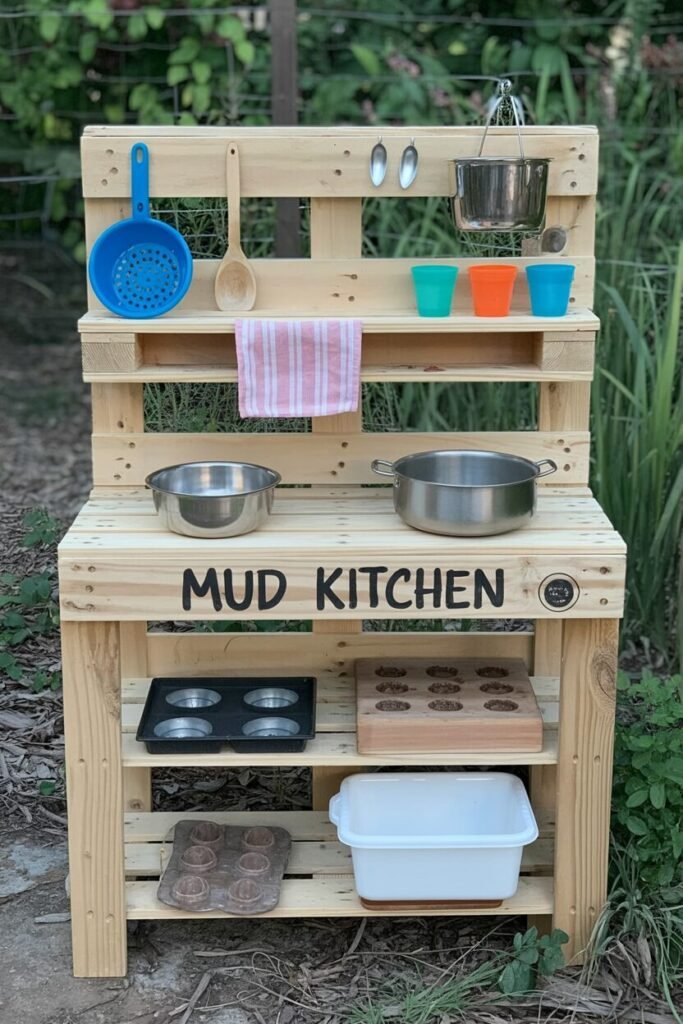
Mud kitchen style isn’t just about a play area; it’s about building a dynamic space full of sensory richness that beautifully finishes off your home’s unique style. It’s a brain-boosting superhero that looks like a lovely yard decoration. When design ideas meet natural textures, kids don’t just play they receive deeply involved, listen closely, and dream large.
Whether it’s the feel of rustic earthy tones, the free-flowing boho layers, the clean Scandi simplicity, or the cozy farmhouse warmth, the real magic is in the balance. We dare you to give every texture its due.
Let each shade find a sweet sensory spot, and let each type of object have the freedom to hang in the breeze with a sense of peace and a whisper of wonder. A well-designed mud kitchen isn’t just a pretty sight in your backyard; it becomes a secret outdoor classroom where form and function finally receive their day in the sun and dance happily hand-in-hand through the mud.
From thoughtful design, born from loving memory, this, my friends, is where outdoor play becomes pure enchantment. Ready to say goodbye to boring and hello to magically surprising with your mud kitchen design?